Best JLPT Study Materials (Part 2): What Worked for Me at N2 and N1
 June 29, 2026
Best JLPT study materials become harder to choose as you move into higher levels. At N2 and N1, the challenge isn’t a lack of resources — it’s figuring out how to study without drowning in them. Listening and reading suddenly feel heavier, time pressure becomes real, and simply adding more books often makes things worse rather than better.
In Part 1, I shared the books and resources that helped me build my foundation from N5 to N3, along with the trial and error that came with finding the right fit.
This post focuses on what changed at N2 and N1. Instead of searching for new materials, I became more selective about what I kept using, what I repeated, and what I stopped adding altogether. These are the books and resources I actually relied on at advanced levels, and how I adjusted my approach when time and stamina became the biggest challenges.
📚 Keep Reading in This Series →
- Best JLPT Study Materials for Beginners: What Actually Worked from N5 to N3
- Japanese Hiragana Katakana Practice Printable PDF (Free Download!)
- Best JLPT Study Materials (Part 2): What Worked for Me at N2 and N1 (reading now)
🔍 Continue Exploring These Series →
Table of Contents
- JLPT N2: Using the Same Materials More Effectively
- How My Approach Changed at N2
- Recommended Books & Resources for N2
- Vocabulary Study at N2
- The Role of Practice Tests at N2
- Listening Practice with Short News Clips
- Dealing with Consistently Low Grammar Scores
- Why This Worked at N2
- JLPT N1: Managing Time and Reading Load
- When Time Became the Biggest Issue
- Recommended Books & Resources for N1
- Using Tensei Jingo for Reading Practice
- Adding a Lightweight Listening Resource at N1
- Increasing the Weight of Practice Tests
- Why I Didn’t Add More Resources
- Studying with YouTube and Netflix on Desktop
- Final Thoughts
JLPT N2: Using the Same Materials More Effectively
How My Approach Changed at N2
At N2, I didn’t experiment with new textbooks anymore. I had already done that up to N3, found a series that worked for me, and decided to stick with it. From this point on, consistency mattered far more than trying something new. Instead of asking “Is there a better book?”, I focused on how to use the same materials more effectively.
What surprised me at this stage was how much the overall study load increased. I originally planned to study only up to N3, but for various reasons — including exam timing — I decided to continue. N2 was the point where I clearly felt that the difficulty had jumped, not just in individual questions, but in how much sustained effort studying required.
Listening also became noticeably harder at N2. Even though I had been comfortable with everyday listening before, my scores started to feel less stable, and I could clearly feel the difference compared to earlier levels.
Recommended Books & Resources for N2
Core textbooks:
- Shin Kanzen Master JLPT N2 (Grammar, Vocabulary, Reading, Listening, Kanji)
Vocabulary practice:
- JLPT vocabulary flashcard app (해독 JLPT or similar)
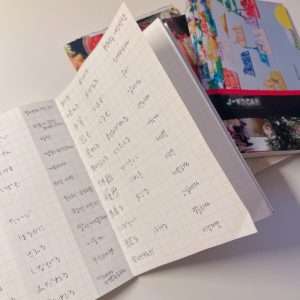
- Personal handwritten vocabulary notes carried daily
Practice tests:
- One or two JLPT N2 mock exam books
Listening practice:
- Daily short news videos from ANNnewsCH
Vocabulary Study at N2
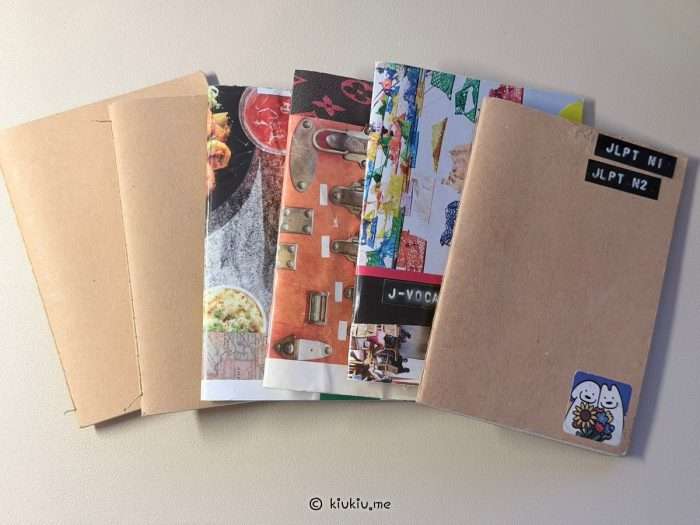
For vocabulary, I kept the same study style I had already settled into at N3. When certain words didn’t stick, I wrote them down separately and reviewed them in short bursts throughout the day. I didn’t change the method — I just relied on it more as the overall workload increased.
The Role of Practice Tests at N2
From N2 onward, practice tests became much more important. Alongside textbooks, I used one or two mock exam books and practiced under timed conditions. My goal wasn’t to analyze every mistake in depth, but to get used to question patterns, pacing, and to identify which sections felt unstable.
This approach helped me adjust my study priorities and made the actual exam format feel familiar instead of intimidating.
Listening Practice with Short News Clips
Around this time, I started watching short news videos from ANNnewsCH every day. Most clips were only one or two minutes long, and I usually watched one or two each morning. I repeated the same clip three to five times, even though it felt difficult at first.
When watching on desktop, I paired this with Language Reactor, which made it easier to quickly check unfamiliar words or replay short segments without breaking my focus.
Starting my day with challenging listening actually made later listening practice feel easier. Even when the content felt hard, it helped set the tone for the rest of my study session.
Dealing with Consistently Low Grammar Scores
Around this stage, I noticed that my grammar scores stayed stubbornly low, even when other sections felt more stable. Instead of moving on and hoping it would fix itself, I started keeping a dedicated grammar mistake log. I wrote down patterns I repeatedly got wrong and reviewed them separately, rather than rereading the entire grammar book from scratch.
This helped me spot very specific weak points instead of treating grammar as one big problem. I’ve written a separate post about how I organized and used this mistake log in more detail, so if grammar is holding your score back, you may find that approach helpful as well.
📝 Related Posts in This Section →
Why This Worked at N2
At N2, I didn’t study longer hours than before. I just stopped spreading my attention across too many resources. Using familiar materials, repeating them often, and pushing listening slightly above test level helped me stay steady even when the difficulty increased.
JLPT N1: Managing Time and Reading Load
When Time Became the Biggest Issue
At N1, the biggest problem wasn’t understanding Japanese — it was time. Reading passages became much longer, and it was obvious that finishing comfortably within the time limit would be difficult. Buying multiple reading textbooks felt both boring and unnecessary, so I looked for a different way to increase reading exposure.
Recommended Books & Resources for N1
Core textbooks:
- Shin Kanzen Master JLPT N1 (Grammar, Vocabulary, Reading, Listening)
Vocabulary practice:
- JLPT vocabulary flashcard app (해독 JLPT or similar)
- Personal handwritten vocabulary notes carried daily
Practice tests:
- Japanese Language Proficiency Test N1 Complete Mock Exams
- The Best Practice Tests for the Japanese-Language Proficiency Test N1
Reading support:
- Tensei Jingo (optional)
Listening practice:
- Daily short news videos from ANNnewsCH
- Todaii: Learn Japanese N5 ~ N1
Using Tensei Jingo for Reading Practice
Instead of adding more JLPT reading books, I started reading Tensei Jingo. I didn’t read it every day — usually around three times a week. What I liked about it was the variety of writing styles and topics, which helped me get used to denser and more abstract texts.
That said, I don’t think this is for everyone. It takes time and mental energy, so if you’re preparing under a tight schedule, repeating JLPT reading materials two or three more times might be more effective.
Adding a Lightweight Listening Resource at N1
At N1, my listening scores were less stable than I expected. Some practice tests felt fine, while others didn’t, and that inconsistency was frustrating. I didn’t want to add heavy listening materials at this stage, so I looked for something I could use more lightly and consistently.
That’s when I started using Todaii. The app reads news articles aloud, which made it easy to fit listening practice into short gaps during the day. I didn’t treat it as intensive study — it was more about keeping my ears engaged without adding pressure.
Using Todaii alongside my existing materials helped smooth out listening exposure, especially on days when I didn’t have the energy for full test-style practice.
📝 Related Posts in This Section →
Increasing the Weight of Practice Tests
At N1, I significantly increased the amount of time I spent on practice tests. I didn’t rely heavily on explanations. My focus was on solving the problems, checking answers, and trying to understand mistakes on my own.
If you don’t need detailed explanations, Japanese Language Proficiency Test N1 Complete Mock Exams works very well. If you prefer explanations in Korean, Korean-language mock exam books are also a good option. What mattered most was getting used to pacing and mental stamina.
Why I Didn’t Add More Resources
At this stage, I actively avoided adding new books or tools. Instead, I repeated what I already had and only added news listening or Tensei Jingo when I felt something was missing. For N1, repetition mattered far more than expansion.
📝 Related Posts in This Section →
Studying with YouTube and Netflix on Desktop
When I studied with YouTube or Netflix, I always used a desktop setup. The main reason was Language Reactor. Being able to hover over words for meanings and click to hear pronunciation made a huge difference, especially with longer sentences and unfamiliar vocabulary.
I didn’t pause for every word. Most of the time, I watched normally and only checked things when something stood out. This tool is something I still use even now, and I’ll be sharing more details about it in a separate post.
Final Thoughts
From N2 to N1, my study strategy became simpler rather than more complex. I stopped looking for new materials and focused on repeating what I already had, especially when time pressure increased. Once I accepted that I didn’t need more books, studying felt calmer and more manageable.
If you’re preparing for N2 or N1, using familiar resources well — and knowing when not to add more — can matter far more than constantly searching for something new.
📚 Keep Reading in This Series →
- Best JLPT Study Materials for Beginners: What Actually Worked from N5 to N3
- Japanese Hiragana Katakana Practice Printable PDF (Free Download!)
- Best JLPT Study Materials (Part 2): What Worked for Me at N2 and N1 (reading now)
📖 Must-Read JLPT Study Tips & Strategies
- JLPT Study Planner with Hobonichi: Timeline and Layout Tips
- What to Do After Passing JLPT N1: How I Found New Motivation
- JLPT Test Results: How I Passed JLPT N1
- What to Expect on JLPT Exam Day: My Experience & Helpful Tips
- Improve JLPT Grammar Score: The Power of Reviewing Mistakes
- How to Improve JLPT Listening: Top Strategies & Tips
Looking for more ways to improve your JLPT study routine? Check out all my JLPT Study Tips for in-depth strategies, exam preparation advice, and motivation!
🖊️ Popular Stationery Reviews
- Planner Supplies I Regret Buying (and Why I’m Keeping Them)
- 2026 Mid-Year Stationery Favorites: 3 Products I Actually Use
- Traveler’s Notebook Card Size Review | 20th Anniversary Set
- Best Washi Tape Dispenser: Kokuyo Bobbin Review
- My Favorite Planner Accessories for Everyday Planning
Looking for the best stationery to enhance your journaling experience? Check out all my Stationery Reviews for detailed insights, product recommendations, and tips to help you choose the perfect tools for your creative projects!
Explore More in Study


Latest Updates:



Featured Videos: