Japanese Hiragana Katakana Practice Printable PDF (Free Download!)
 May 20, 2026
Hiragana katakana practice printable PDF materials are often searched by learners who already know what hiragana and katakana are, but still feel unsure when it comes to actually using them. Charts look familiar, characters feel recognizable, yet something doesn’t quite stick.
That gap usually appears when learners move from passive exposure to active practice. Many people reach a point where simply looking at characters no longer feels enough, especially when studying on their own or helping a child learn Japanese at home.
This post introduces a set of hiragana and katakana practice worksheets created to support that stage of learning. The focus is not on explanations or memorization tricks, but on practical writing practice that can be repeated easily, whether printed or used as a digital PDF.
If you’ve been looking for a clear, flexible hiragana katakana worksheets PDF that fits naturally into daily study routines, this guide will help you understand how to use it and who it’s best suited for.
If you’re just starting JLPT, you can also check out my N5 textbook recommendation post.
🔍 Continue Exploring These Series →
- JLPT Study Guide: Last-Minute Preparation Tips for Success
- JLPT Vocabulary Study: How I Built My Vocab from N5 to N1
- Japanese Hiragana Katakana Practice Printable PDF (Free Download!) (reading now)
Table of Contents
Why Writing Practice Still Matters for Hiragana and Katakana
Writing practice plays a much bigger role in learning hiragana and katakana than many learners expect. Recognition alone often feels like progress, but it can be misleading.
From my own experience, characters that I only “recognized” were the first ones to disappear from memory. The ones I wrote slowly and repeatedly were the ones that stayed. Writing forces you to process the shape, direction, and balance of each character, which makes the learning active rather than passive.
That doesn’t mean writing practice has to be strictly analog. This hiragana katakana practice printable PDF was designed to work both ways: printed on paper for traditional handwriting or used digitally on a tablet with a stylus. The learning benefit comes from the act of writing itself, not from the medium.
Writing on paper vs using a digital PDF
Paper writing has its strengths. It builds muscle memory and makes you more aware of stroke order and pressure. At the same time, digital PDFs have advantages, especially when it comes to consistency and repetition.
Using a digital PDF makes it easy to practice without reprinting, undo mistakes without pressure, and fit short practice sessions into a busy day. Personally, I used both methods. On days when I had more time, I printed the sheets. On busier days, I opened the PDF on a tablet and practiced directly. What mattered wasn’t choosing one over the other, but continuing the habit.
What’s Included in This Hiragana Katakana Practice Printable PDF
This printable set focuses on clarity and repetition rather than decoration. Each page is structured to encourage consistent practice without distraction.
What you’ll find in the PDF:
- Hiragana practice sheets organized by vowel and consonant groups
- Katakana practice sheets designed for repeated writing
- Light gray tracing guides for early practice
- Clean grid layout that supports proper spacing and balance
I intentionally avoided overcrowding the pages. From my experience, overly busy worksheets tend to overwhelm learners and reduce motivation. These sheets are meant to be returned to again and again, not completed once and forgotten.
How to Use These Printable Worksheets Effectively
How you use a hiragana katakana worksheets PDF matters just as much as having one. Writing ten characters once is far less effective than writing a few characters multiple times over several sessions.
For complete beginners
Start small. One row or even one column per session is enough. Look at the character first, trace it lightly if needed, and then write it freehand. I found that stopping before I felt tired helped me stay consistent the next day.
For kids learning Japanese
Children benefit most from low-pressure repetition. Instead of finishing full pages, focusing on a few characters repeatedly tends to work better. Using the printable PDF digitally can also reduce frustration, since mistakes can be erased easily and practice stays positive.
For self-study adult learners
If you’re studying alone, structure becomes especially important. I often paired writing practice with short reading sessions: reading first, writing the characters that felt unfamiliar, and revisiting them the next day. This approach helped turn passive recognition into active recall.
Hiragana vs Katakana: Why Katakana Feels Harder
Many learners find katakana more difficult than hiragana, and I was no exception. Katakana often feels abstract, with sharper shapes and several characters that look similar at first glance.
For me, katakana was where recognition completely failed. I could tell a word was written in katakana, but individual characters blurred together. That was when I created this worksheet. By isolating each character and writing it repeatedly without trying to memorize full words, the shapes slowly became familiar. Now, katakana no longer feels confusing or intimidating, and that change came almost entirely from writing practice.
Download Hiragana Katakana Practice
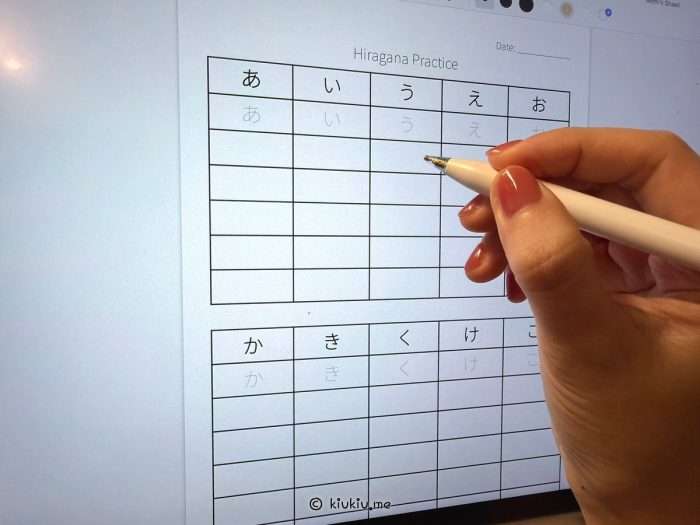
This hiragana katakana practice printable PDF works well with both A4 and US Letter sizes. Standard printer paper is fine for everyday practice, while slightly thicker paper works better if you prefer pens. The Google Drive download includes 2 separate PDF files, so you can print only the sections you need or organize them however you like.
Download Hiragana Katakana Worksheets Now!
If you’re using the PDF digitally, a stylus with minimal lag and a note-taking app that allows page duplication will make practice smoother. Having the files separated also makes it easier to revisit specific character groups without scrolling through a single long document. Regardless of the setup, focusing on slow, deliberate writing is more important than speed.
Who This Printable Is Best For
This worksheet set is a good fit if you struggle with memorization, want writing-focused practice rather than explanations, or prefer materials that work both digitally and on paper. It’s especially helpful for independent learners or parents studying alongside their children.
It may not be ideal if you’re looking for grammar lessons or vocabulary drills. The focus here is simple and intentional: writing practice that supports long-term retention.
Usage Notes
This hiragana katakana practice printable PDF is intended for personal learning and educational use. You’re encouraged to print and reuse the sheets, use them digitally for daily practice, and integrate them into your existing study routine.
The goal isn’t perfection. It’s familiarity. From my own experience, characters don’t become easy because we memorize them once. They become easy because we’ve written them enough times that they no longer feel foreign.
📖 Must-Read JLPT Study Tips & Strategies
- JLPT Study Planner with Hobonichi: Timeline and Layout Tips
- What to Do After Passing JLPT N1: How I Found New Motivation
- JLPT Test Results: How I Passed JLPT N1
- What to Expect on JLPT Exam Day: My Experience & Helpful Tips
- Improve JLPT Grammar Score: The Power of Reviewing Mistakes
- How to Improve JLPT Listening: Top Strategies & Tips
Looking for more ways to improve your JLPT study routine? Check out all my JLPT Study Tips for in-depth strategies, exam preparation advice, and motivation!
🖊️ Popular Stationery Reviews
- Planner Supplies I Regret Buying (and Why I’m Keeping Them)
- 2026 Mid-Year Stationery Favorites: 3 Products I Actually Use
- Traveler’s Notebook Card Size Review | 20th Anniversary Set
- Best Washi Tape Dispenser: Kokuyo Bobbin Review
- My Favorite Planner Accessories for Everyday Planning
Looking for the best stationery to enhance your journaling experience? Check out all my Stationery Reviews for detailed insights, product recommendations, and tips to help you choose the perfect tools for your creative projects!
Explore More in Study



Latest Updates:

Featured Videos: