Best JLPT Study Materials for Beginners: What Actually Worked from N5 to N3
 April 22, 2026
Best JLPT study materials are something a lot of learners end up searching for sooner or later, usually after realizing that there are far more options than expected. Once you start looking, it’s easy to feel overwhelmed by long recommendation lists that don’t really explain when certain books are useful or why they worked for someone else.
While preparing for JLPT, I went through a mix of textbooks, apps, and other resources, and I quickly learned that the “best” materials depend heavily on timing and study style. Some books felt almost too simple at first but became surprisingly helpful later on, while others looked promising but never really clicked for me. This post focuses on the books and resources that actually worked for me from N5 to N3, and how I figured out what to keep, what to drop, and what to change along the way.
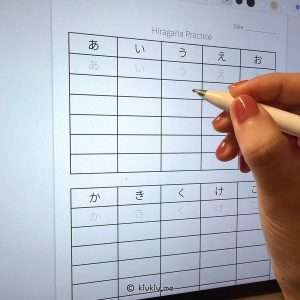
If you’re starting Japanese, keep an eye out for my upcoming free Hiragana and Katakana practice PDFs, and also check out the post about why I decided to begin preparing for the JLPT.
📚 Keep Reading in This Series →
- Best JLPT Study Materials for Beginners: What Actually Worked from N5 to N3 (reading now)
- Japanese Hiragana Katakana Practice Printable PDF (Free Download!)
- Best JLPT Study Materials (Part 2): What Worked for Me at N2 and N1
Table of Contents
- My Japanese Learning Background Before JLPT
- What I Already Knew (and What I Didn’t)
- Studying Through Korean vs. English
- Why This Background Matters
- How I Approached Kanji Before Starting JLPT
- JLPT N5 & N4: Vocabulary and Grammar First
- How I Chose Materials at This Stage
- Recommended Books & Resources for N5 & N4
- Why I Focused on Vocabulary and Grammar
- Vocabulary Practice Outside the Books
- Listening Through Everyday Content
- Why This Approach Worked for Me
- JLPT N3: When My Study Style Started to Matter
- How I Started at N3
- What I Looked for Instead
- Recommended Books & Resources for N3
- Why This Setup Worked Better
- Final Thoughts
My Japanese Learning Background Before JLPT
What I Already Knew (and What I Didn’t)
I didn’t start JLPT from zero, but I also wasn’t fluent when I began. I already knew hiragana and katakana, and listening felt somewhat familiar thanks to years of exposure through anime, dramas, movies, and Japanese games. That said, this familiarity was mostly passive and limited to everyday contexts.
At the same time, there were clear gaps in my foundation:
- Listening: could catch the general idea but not details; JLPT N5–N4 listening materials felt manageable, and I could understand around 80% of everyday, slice-of-life anime (school or daily-life settings, not fantasy)
- Grammar: understood meanings by feel, without knowing the rules
- Kanji: almost nonexistent, with no real system — limited to numbers and very basic nature-related characters (sun, moon, tree, etc.)
This level of understanding was enough for casual consumption, but not enough for structured JLPT preparation.
Studying Through Korean vs. English
Another important factor was language choice. I’m a Korean native speaker, and while I briefly looked at English materials early on, I eventually switched almost entirely to studying through Korean explanations. Grammar patterns clicked faster, and kanji explanations felt more intuitive, which made studying far less frustrating as the levels increased.
That said, many of the resources I used later weren’t language-dependent:
- apps and flashcards
- practice test books
- news, anime, and other media
Because of that, I still feel comfortable recommending these materials to learners studying in English as well.
Why This Background Matters
This mix of partial familiarity, weak fundamentals, and a later shift to structured study shaped how I approached JLPT. It’s also why my recommendations change by level — what worked well at N5 wouldn’t have been enough at N3, and some resources that felt unnecessary early on became extremely useful later.
How I Approached Kanji Before Starting JLPT
Studying Kanji Before Touching JLPT
Before starting JLPT prep, I spent about a month focusing only on kanji. My goal wasn’t memorization, but understanding how kanji are built and how characters share parts and meanings. I used a Korean book, 일본어 상용한자 무작정 따라하기, which organizes kanji by radicals. If you’re studying in English, Kanji Dictionary 2500 for Foreigners Learning Japanese follows a very similar approach.
Why This Helped Later
I didn’t try to finish the entire book or memorize all the kanji. Instead, I focused on recognizing patterns and components. At the time, it felt slow, but by the time I reached N2, it became much easier to guess meanings, remember readings, and stay calm when facing unfamiliar kanji in reading sections.
JLPT N5 & N4: Vocabulary and Grammar First
How I Chose Materials at This Stage
At the N5 and N4 level, my main goal was to build a foundation without burning out early. I looked for materials that were easy to start, clearly organized, and simple enough to use consistently. Instead of trying to cover every skill in depth, I focused on resources that helped me keep moving forward, even on days when motivation was low.
Recommended Books & Resources for N5 & N4
For N5 and N4, these were the materials I relied on the most.
Core textbooks:
Vocabulary practice:
- A JLPT vocabulary flashcard app (해독 JLPT or any similar flashcard-style app)
Listening support:
Why I Focused on Vocabulary and Grammar
At this stage, listening felt manageable, and reading difficulty mostly came down to how many words and grammar patterns I recognized. Instead of spreading my attention thin, I treated vocabulary and grammar as the core and let everything else support that foundation. As my word count grew, reading became less intimidating, and basic listening confidence followed naturally.
Vocabulary Practice Outside the Books
Alongside textbooks, I used a JLPT vocabulary flashcard app almost daily. What mattered wasn’t the specific app, but the format. Flashcards were easy to use in short sessions and worked well for repetition throughout the day. On days when I didn’t feel like opening a textbook, this was often all I did.
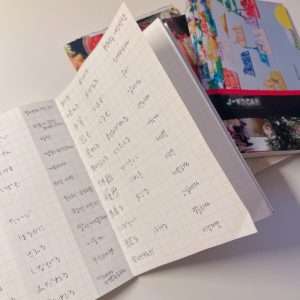
When certain words refused to stick, I wrote them down in a small notebook and reviewed them whenever I had a moment. That simple habit made a noticeable difference in retention and kept vocabulary study flexible.
You can also check out my post on how I studied vocabulary.
Listening Through Everyday Content
For listening, I didn’t rely heavily on JLPT-style materials yet. Instead, I watched Atashin’chi, a slice-of-life anime with everyday conversations and practical vocabulary. Because the setting is very close to daily life, it was easy to follow without feeling overwhelmed.

At the time, it felt light and almost casual, but later on, especially when I reached N3, I kept running into words and expressions that I clearly remembered hearing here. It was low-pressure, enjoyable, and surprisingly useful in the long run.
Why This Approach Worked for Me
N5 and N4 can still feel challenging, especially when you’re building your foundation for the first time. For me, narrowing my focus made studying feel more manageable and less stressful. Keeping things simple early on helped me avoid burnout and left more room to adjust my strategy later, when the levels became more demanding.
📝 Related Posts in This Section →
JLPT N3: When My Study Style Started to Matter
How I Started at N3
At N3, I began with a single-volume textbook that covered all sections in one book. It had very good reviews, so I assumed it would be efficient to work through everything together. In theory, it sounded perfect.
In practice, it wasn’t a good fit for me at all.
I like studying a little bit of each section every day, but flipping back and forth between grammar, vocabulary, reading, and listening took more time than I expected. This felt even worse because I was using the ebook version. Every switch between sections broke my concentration, and studying started to feel inefficient rather than organized.
On top of that, the explanations weren’t as detailed as I wanted. They weren’t wrong or bad, just not enough for the way I learn. I kept feeling like I understood what the answer was, but not why it was correct.
That was when I realized that the issue wasn’t the level — it was the structure.
What I Looked for Instead
After that experience, I stopped trying to force myself to “make it work” and started looking for resources that matched how I actually study. My criteria became very clear:
- materials separated by skill, not combined
- explanations detailed enough to remove ambiguity
- easy to plan daily study without constant page flipping
This was also the point where I fully switched to studying in Korean. Grammar explanations and nuance made much more sense to me that way, especially at N3 where small differences start to matter.
Recommended Books & Resources for N3
Core textbooks (by subject):
- New Kanzen Master Grammar N3
- New Kanzen Master Vocabulary N3
- New Kanzen Master Reading N3
- New Kanzen Master Listening N3
Vocabulary practice:
- JLPT vocabulary flashcard app (해독 JLPT) + notebooks
Additional support:
Why This Setup Worked Better
Separating subjects completely changed how N3 felt. I could sit down and decide, “Today is grammar,” without touching anything else. Planning became easier, and studying felt calmer and more intentional.
Instead of constantly switching contexts, I could go deeper into one area at a time. That also made it easier to notice weak points and adjust my schedule. N3 was still challenging, but it no longer felt chaotic or frustrating.
More importantly, this setup carried over smoothly into N2. Once I found a structure that worked for me, I stopped experimenting and focused on consistency.
Final Thoughts

Looking back, the hardest part of studying for JLPT wasn’t memorizing vocabulary or learning new grammar patterns. It was figuring out which materials actually fit the way I study and knowing when something wasn’t working anymore. From N5 to N3, my approach changed quite a bit, not because the goal changed, but because my needs did.
If there’s one thing I hope comes through in this list, it’s that good study materials aren’t universal. A book that works perfectly for someone else might feel frustrating or inefficient for you, and that doesn’t mean you’re studying wrong. Paying attention to how you react to a resource — whether it helps you stay consistent or quietly drains your energy — matters just as much as how popular that resource is.
In the next part, I’ll be sharing how my strategy shifted again at N2 and N1, when adding more materials stopped helping and consistency became the real challenge. If you’re planning to go beyond N3, that transition is just as important as building a solid foundation.
📚 Keep Reading in This Series →
- Best JLPT Study Materials for Beginners: What Actually Worked from N5 to N3 (reading now)
- Japanese Hiragana Katakana Practice Printable PDF (Free Download!)
- Best JLPT Study Materials (Part 2): What Worked for Me at N2 and N1
📖 Must-Read JLPT Study Tips & Strategies
- JLPT Study Planner with Hobonichi: Timeline and Layout Tips
- What to Do After Passing JLPT N1: How I Found New Motivation
- JLPT Test Results: How I Passed JLPT N1
- What to Expect on JLPT Exam Day: My Experience & Helpful Tips
- Improve JLPT Grammar Score: The Power of Reviewing Mistakes
- How to Improve JLPT Listening: Top Strategies & Tips
Looking for more ways to improve your JLPT study routine? Check out all my JLPT Study Tips for in-depth strategies, exam preparation advice, and motivation!
📝 Must-Try Journaling Ideas & Inspiration
- Travel Journal Ideas: 8 Creative Ways to Capture Your Trips
- Hobonichi 2027 Lineup Preview: New Covers, Collaborations & Planners
- Sourdough Journal for Home Bakers: Track Starter, Levain, and Bake in One Place
- Kids Activity Planner for Parents: A Summer Schedule for Better Home Days
- Printable Knitting Journal: For Knitters Who Want to Keep Every Project
Want to level up your journaling practice? Explore tips, prompts, and organization ideas: Browse All Journaling Tips
Explore More in Study



Latest Updates:


Featured Videos: