Best Washi Tape Dispenser: Kokuyo Bobbin Review
 June 8, 2026
Are you a washi tape lover? How do you organize your washi tapes once your collection starts growing? I love washi tape, but storing it has always been one of those small organization problems that never felt fully solved. The rolls are cute, but they are bulky, and once you have enough of them, they can quickly take over drawers, boxes, or containers.
I have tried a few different washi tape storage methods over the years, but I still wanted something more compact and easier to maintain. In this post, I’m sharing my Kokuyo Bobbin washi tape dispenser review and how it worked for my growing washi tape collection.
📚 Keep Reading in This Series →
Table of Contents
- What Is the Kokuyo Bobbin?
- My Experience with the Kokuyo Bobbin
- What I Liked About the Kokuyo Bobbin
- Compact Size and Easy Storage
- Smooth Winding
- Stackable Bobbins
- Optional Cutter and Case
- Affordable Refills
- What I Didn’t Like
- Tips for Using the Kokuyo Bobbin
- Lock It Before You Start
- Start Over If the Alignment Is Off
- Hold the Side Firmly While Winding
- Slow Down with Stickier Tapes
- Stop Before the Tape Gets Damaged
- Kokuyo Bobbin vs. mt Maki
- Is the Kokuyo Bobbin Worth It?
What Is the Kokuyo Bobbin?
The Kokuyo Bobbin is a washi tape mini roll maker that lets you wind regular washi tape onto small plastic bobbins. Instead of keeping every tape in its original full-size roll, you can transfer some of the tape onto a smaller bobbin and store it in a more compact way. Kokuyo also sells optional cases and cutters, so the bobbin can work almost like a tiny washi tape dispenser if you want to use it that way.
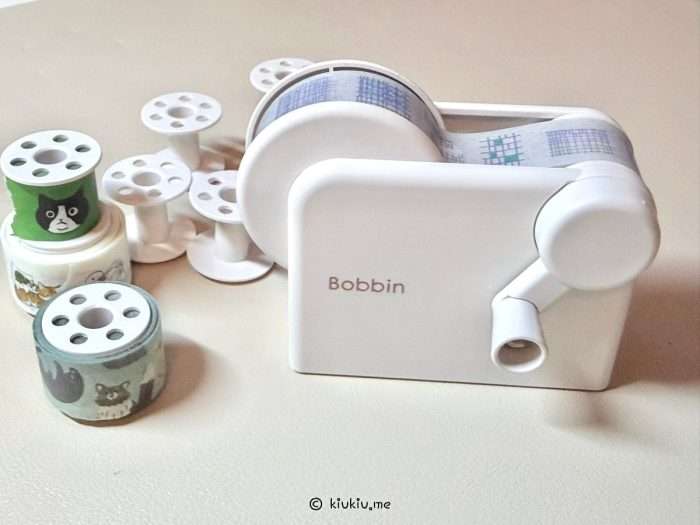
This is not the same type of washi tape dispenser as the larger desktop ones where you place a full roll inside and cut from there. The Kokuyo Bobbin is more about making mini rolls. You put a refill bobbin into the tool, attach the end of the washi tape, lock it, and turn the handle to wind the tape onto the bobbin. Once it is full enough, you can remove the bobbin and store it on its own or use it with a matching Kokuyo case.
What makes this product appealing is the size. The bobbins are tiny compared to regular washi tape rolls, and they can make a big difference if you have a lot of tapes. For people who only have a few washi tapes, this might not feel necessary. But if you have drawers, boxes, pouches, or containers full of tape, the Kokuyo Bobbin can be a very practical washi tape storage solution.
My Experience with the Kokuyo Bobbin
Where to Buy?
I bought the Kokuyo Bobbin from JetPens for about $8. The version I purchased came with the mini roll maker and two refill bobbins, which made it easy to test without buying a large set right away. The refill bobbins were also very affordable. A pack of six refills was about $4.50, so each bobbin costs less than $1!
That refill price was one of the biggest reasons I wanted to try it. If the refills were expensive, I probably would have hesitated because I have over 50 washi tapes. But because the bobbins are inexpensive, it felt realistic to wind multiple tapes without feeling like each one needed to be “special enough” to deserve its own bobbin.
I had actually hoped to find the Kokuyo Bobbin while I was in Japan. I checked stores like Tokyu Hands and Loft, but I did not see it during that trip. Maybe some locations carry it and I just missed it, but I decided not to keep hunting for it in person. Ordering from JetPens was simple, and I was happy that I could still try it after coming back.
Testing Around 30 Washi Tapes
I first bought the Kokuyo Bobbin maker set just to test it, using the two refill bobbins that came with it. I liked it so much that I ordered five more refill packs from JetPens, and after those arrived, I ended up winding around 30 washi tapes from my collection.
I tested a mix of tapes, including regular mt washi tape, mt collaboration or limited tapes, Japanese Daiso washi tape, tapes from AliExpress, and random tapes I picked up from local stationery shops or during past trips. Since my collection is not all from one brand, I wanted to see whether the Kokuyo Bobbin worked only with certain tapes or if it could handle a more mixed collection.
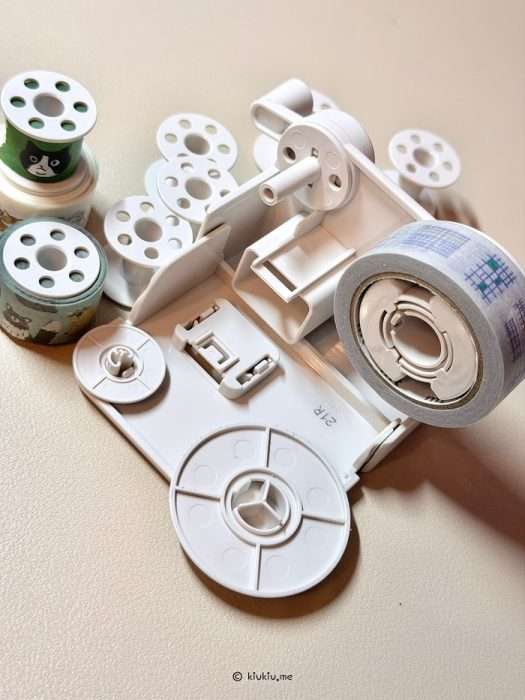
Here is how they worked for me:
- Regular mt washi tape: This worked the best in terms of smooth winding. The tape fit nicely, wound smoothly, and did not tear even when I turned the handle fairly quickly. Since mt makes up a large part of my collection, this was a huge plus. However, a new regular mt roll did not fit completely onto one bobbin, so I still had a noticeable amount left to wind by hand.
- mt collaboration and limited tapes: These also worked well overall, but a few felt slightly tighter when winding. They still wound neatly, but I had to slow down a bit instead of turning the handle too quickly.
- Japanese Daiso washi tape: This also worked very smoothly, and compared to mt, I was able to wind almost the whole roll onto one bobbin. There was very little left at the end, so it felt especially satisfying for compact storage.
- AliExpress washi tape: This was more mixed. Some tapes worked surprisingly well, but others tore more easily, felt harder to wind, or did not stick neatly at the end.
- Random stationery shop and travel finds: These depended on the tape. Some wound just as smoothly as mt or Daiso, while others needed a little more patience.
Overall, I liked that I could put on a video and wind tapes casually without needing to focus too much. It became one of those oddly satisfying organizing tasks, and the finished bobbins looked neat enough that I wanted to keep going.
What I Liked About the Kokuyo Bobbin
Compact Size and Easy Storage
The first thing I liked was how small and cute the bobbins are. The tool itself is also compact, and compared to mt Maki, the Kokuyo Bobbin feels much smaller and easier to store. I also have to mention the little rolling sound it makes while winding. It has this cute “dororok” feeling that makes the process more satisfying than I expected.
But the real benefit is not just that it is cute. It actually saves space. Before using the Kokuyo Bobbin, I had more than two containers full of washi tape, and I did not always want to pull out the whole container just to use one tape. I even made a separate washi tape binder using a Traveler’s Notebook Passport Size, where I kept sample cards with each tape wrapped around 3 to 5 times for quick access. If you are interested in how I made that washi tape binder, you can check out that post here.
After winding many of my regular 15mm tapes onto Kokuyo Bobbins, I was able to reduce more than two containers into one container. I still have some wider tapes that could not be wound onto these bobbins, but for regular tapes, the space-saving effect was very clear.
📝 Related Posts in This Section →
Smooth Winding
The winding experience was better than I expected. With mt and Japanese Daiso washi tapes, the tape moved smoothly and did not tear easily. I could wind them fairly quickly, and the tape still stayed in good shape. The 15mm width also fit really well, so the finished bobbins looked clean.
This is important because a washi tape mini roll maker is only useful if the winding process is not annoying. If the tape tears constantly or the tool feels too fussy, I know I will not keep using it. With the Kokuyo Bobbin, I was able to wind tape while watching YouTube, and before I knew it, I had finished around 30 tapes.
Stackable Bobbins
Another big advantage is that the refill bobbins can stack. This was one of the reasons I wanted to try the Kokuyo Bobbin in the first place. If I wind tapes into tiny rolls but they still roll around everywhere, that does not really solve my storage problem. The stacking feature makes the finished bobbins feel much more organized.
I like that the bobbins can be stored together in a compact way instead of becoming another set of loose little things. Washi tape storage can easily turn into a problem of “small cute things scattered everywhere,” so the stackable design makes a difference.
This is also why I prefer this over simply winding tape onto random cards or boards for everyday storage. Sample cards can be useful, especially for sharing or carrying small amounts of tape, but for my main collection, I wanted something neater and more structured. The Kokuyo Bobbin feels more like a proper system.
Optional Cutter and Case
Kokuyo also makes a dedicated cutter and case for the bobbins. I did not buy every accessory right away, but I like that the option exists. The accessories are not as cheap as the refill bobbins, so I would not buy them for every single tape. But for favorite tapes, basic tapes, or the ones I reach for all the time, I can see them being very useful. It would be nice to have a few ready-to-use tapes on my desk without keeping the full rolls out.
Affordable Refills
The price is another reason I was impressed. The main tool was around $8 and included two bobbins, and the refill pack was around $4.50 for six. That means the refills are less than $1 each, which is very reasonable for this type of storage system.
When you have a lot of washi tape, the cost of storage supplies matters. I do not want to spend more on organizing my tapes than I spent on the tapes themselves. Because the refills are affordable, I felt comfortable winding a large portion of my collection.
What I Didn’t Like
It Holds About 3 Meters
The biggest limitation is that each bobbin holds about 3 meters of washi tape. That is enough for a good amount of tape, but it usually will not hold an entire new roll of regular mt washi tape. If you are expecting to transfer every full roll completely, this may feel limiting.
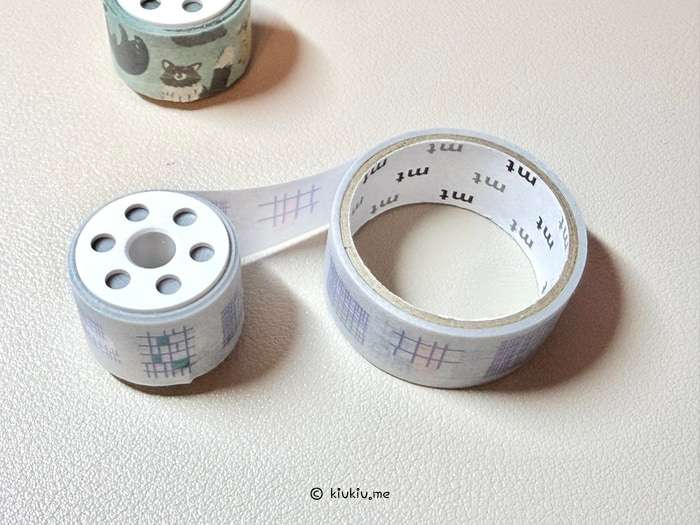
I also noticed that if I tried to wind too much, the tape could start rubbing against the lower part of the tool. I actually had a few tapes get slightly scratched when I pushed the limit too much.
For me, this was not a dealbreaker. I do not necessarily need every full roll to fit on one bobbin. I just wanted to reduce the bulk of my collection, and for that, it worked very well. But I do think it is important to know the limit before buying it.
It Only Works Up to 15 mm Wide
The Kokuyo Bobbin works with tapes up to 15mm wide. This is fine for many standard washi tapes, especially regular mt tapes and a lot of Japanese Daiso tapes. But if you have wider washi tapes, they will not fit.
This was a little disappointing because I do have some wider tapes in my collection. I especially wished I could wind some of the wider washi tapes I bought in Japan last year, but they were too wide for the Kokuyo Bobbin. I will link that Japan stationery haul post here too, since those tapes were part of the collection I hoped to organize.
That said, most of the tapes I use most often are regular 15mm tapes, so it still solved a large part of my storage problem. I just would not recommend buying this expecting it to handle every type of washi tape.
📝 Related Posts in This Section →
Alignment Can Take a Little Practice
Most of the time, the tape wound neatly, but alignment was not perfect every single time. Out of around 30 tapes, I had about three times where it was difficult to keep the tape aligned the way I wanted.
This can happen with hand-winding too, and I also had similar issues with mt Maki before, so I do not see it as a major flaw of the Kokuyo Bobbin. It is just part of winding washi tape.
The good thing is that it gets easier with practice. After a few tries, I understood how to hold the tape and when to stop and restart. It is not difficult, but the first few tapes may take a little more attention.
Tips for Using the Kokuyo Bobbin
Lock It Before You Start
There is a lock on the side of the tool, and you should definitely use it before winding. I forgot to lock it at first and had to start over. It was not a huge disaster, but it was annoying enough that I remembered after that.
The lock helps keep the bobbin in place while you wind. Without it, the process feels less stable, and the tape may not wind the way you want. This is a small step, but it makes the whole experience much smoother.
Start Over If the Alignment Is Off
If the alignment is off, I do not recommend trying to fix it while continuing to wind. It is usually better to unwind it and restart from the beginning. Trying to correct it halfway can make the tape wrinkle or layer unevenly.
This is especially true if you care about how neat the finished bobbin looks. Washi tape is forgiving, but once it starts building up unevenly, it can get worse quickly. Restarting takes a little more time, but the result is cleaner.
Hold the Side Firmly While Winding
While winding, I found it helpful to hold the side firmly. Sometimes the tool can feel slightly wobbly or make a small rattling movement, especially if I am winding quickly. Holding it steady gives more control.
This also helps with alignment. If the tape is feeding into the bobbin at a consistent angle, the finished roll looks much better. You do not need to grip it too hard, but a little support makes the tool easier to use.
Slow Down with Stickier Tapes
Some washi tapes have stronger adhesive and do not release from the original roll as easily. When I tried to wind those too quickly, the tape could pull too hard and tear.
For tapes like that, I found it better to slow down and let the tape release from the roll more gently. The Kokuyo Bobbin itself still worked, but the tape needed a little more patience.
Stop Before the Tape Gets Damaged
When the bobbin starts getting full and the tape feels tight, stop. I know it is tempting to keep going and fit just a little more, but it is not worth damaging the tape. Once the tape starts rubbing or scraping, it is better to finish the rest by hand or leave it on the original roll.
This is especially important if the washi tape has a delicate design, foil, or a softer texture. The whole point of using the Bobbin is to make the tape easier to store and use, not to ruin it in the process.
Kokuyo Bobbin vs. mt Maki
Before trying the Kokuyo Bobbin, I tried mt Maki. I liked mt Maki, and it worked well for winding washi tape, but the problem is that it has been discontinued. Since the refills are no longer easy to find, it became less practical as a long-term system.
Compared to mt Maki, the Kokuyo Bobbin feels much more compact. The tool is smaller, the finished bobbins are smaller, and the refills are affordable and easier to buy. That makes it feel like a better option for my current collection.
I would not say mt Maki was bad. It was a good product, and I used it happily. But for now, Kokuyo Bobbin fits my needs better. It is smaller, more affordable, and better suited for compact washi tape storage.
Is the Kokuyo Bobbin Worth It?
For me, yes. The Kokuyo Bobbin is absolutely worth it. Washi tape storage has been a small frustration for years, and I have tried so many methods: pegboards, drawers, sample boards, and mt Maki. They all worked in some ways, but none of them felt like the right long-term solution.
The Kokuyo Bobbin worked because it actually made my regular 15mm tapes smaller and easier to manage instead of just moving the clutter somewhere else. It is not perfect, and I still have some wider tapes left, but I was able to reduce more than two containers of washi tape into one container. For my mt and Daiso tapes, that was exactly the kind of practical result I wanted.
🖊️ Popular Stationery Reviews
- Planner Supplies I Regret Buying (and Why I’m Keeping Them)
- 2026 Mid-Year Stationery Favorites: 3 Products I Actually Use
- Traveler’s Notebook Card Size Review | 20th Anniversary Set
- My Favorite Planner Accessories for Everyday Planning
- Pilot Fountain Pen Review: Is Pilot Lightive Perfect for Fine Line Lovers?
Looking for the best stationery to enhance your journaling experience? Check out all my Stationery Reviews for detailed insights, product recommendations, and tips to help you choose the perfect tools for your creative projects!
✂️ Must-Try Stationery DIY Projects
- Hobonichi Weeks 2026 Setup: How I Set Up My Planner for 2026
- Time Tracker for Hobonichi Weeks & A6 (Free Download)
- How I Set Up My Traveler’s Notebooks – Passport Size
- Best Hole Punch for Ring Binders: What Worked & What Didn’t
- DIY Washi Tape Binder with Travelers Notebook
Looking for creative ways to personalize your stationery? Dive into all my Stationery DIY projects for step-by-step tutorials, unique ideas, and inspiration to elevate your journaling and crafting experience!
Explore More in Creativity


Latest Updates:

Featured Videos: