New Year’s Resolutions: 7 Ways to Start the Year with Intention
 November 23, 2026

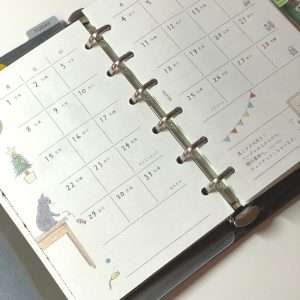
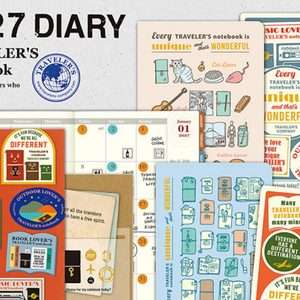
Can you believe 2026 is almost over? 😭 Lately, I’ve been doing quite a bit of shopping for next year’s planners. The new year hasn’t even started, but I’m already thinking about how I want to use each one and what else I’d like to try in 2027. Once I find a planner I like, I can’t resist looking through the layouts and imagining what I’ll write on those fresh pages.
Of course, I haven’t managed to follow through on every single one of my New Year’s resolutions. Not even close! But I still love making plans at the end of the year. I start remembering hobbies that slipped down my priority list, projects I wanted to try, and things I enjoyed but didn’t make enough time for. This time, I’d like to make my plans a little more realistic, especially when it comes to the things I want to keep doing throughout the year.
📚 Keep Reading in This Series →
- Best 2026 Planners: Top Picks for Every Planning Style
- Best Planners 2025: Customizable & Fountain Pen-Friendly Picks
🔍 Continue Exploring These Series →
Table of Contents
1. Choose a Planner for the New Year
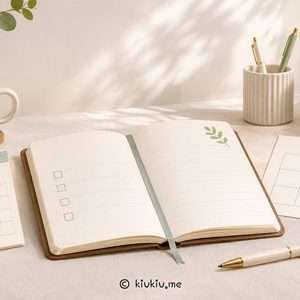
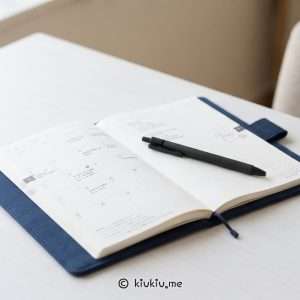
One of my favorite parts of getting ready for a new year is choosing a planner! I already own more notebooks than I probably need, but I still get excited when the new collections come out. New cover colors, different paper, slightly updated layouts… it’s very easy to end up with a longer wish list than I intended. Haha.
After trying quite a few planners, though, I’ve learned that a beautiful notebook and a notebook I’ll actually use aren’t always the same thing. I’ve bought planners because I loved the cover, only to realize they were too big or heavy to carry around. I’ve also tried daily layouts that looked wonderful at first but felt overwhelming when I couldn’t fill the pages every day. These days, before buying another planner, I try to ask myself, “Will I actually make good use of this one?”
Finding a Layout That Fits Your Routine
I usually start by thinking about what I want to record. Different layouts are convenient for different things, and one planner doesn’t necessarily have to manage every part of life.
- Schedules and to-do lists: A weekly planner makes it easy to see upcoming commitments at a glance.
- Daily journaling: A notebook with enough writing space, especially if you like longer entries.
- Studying or hobby tracking: A binder or flexible notebook that lets you organize different subjects.
- Travel and spontaneous ideas: A small notebook that’s easy to carry with you.
I use different planners for different purposes. When I’m managing schedules, I pay attention to the weekly layout. For journaling or drawing, the paper quality and notebook size matter much more. I discussed some of those practical differences in my 2026 planner comparison, including how the page layout and portability can affect everyday use.
What I Check Before Buying
When I’m shopping for a planner, I look at its size, paper quality, monthly or weekly format, and whether it works well with the pens I like using. For a journal, I often prefer an undated format because writing every single day isn’t always realistic for me. I can skip a few days and pick up where I left off without feeling like I’m wasting pages.
It’s also helpful to think about what worked—and what didn’t—in your current planner. Was it easy to take with you? Did you have enough space to write? Were there sections you never used? I revisited the Hobonichi Weeks in 2026, and, as I mentioned in my Hobonichi Weeks setup post, it became much easier to use once I decided what I wanted to track in it.
And if buying a new planner isn’t in your budget, you can absolutely start with an empty notebook you already have or use a digital calendar. I’m just someone who loves stationery, so shopping for next year’s planners has become a little year-end event of its own. Haha.
📝 Related Posts in This Section →
2. Plan Your Goals with a Mandalart
Once you’ve chosen a planner, it’s time to think about what you’d like to put in it. I tend to have a lot of ideas at this time of year, and sometimes deciding where to begin is harder than coming up with the goals themselves. One planning method I like for organizing those ideas is the Mandalart.
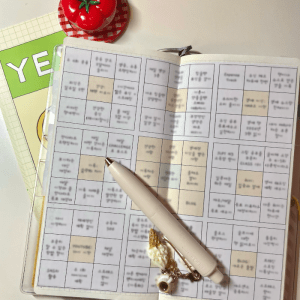
A Mandalart is a goal-setting chart. You place one main goal in the center of a 3×3 grid and fill the surrounding spaces with related goals. You can expand those ideas into a larger 9×9 chart, breaking each area down into more specific things you want to do.
Let’s say your main goal is improving your drawing skills. You might start with figure drawing, colored pencils, watercolor, and sketching as separate areas. Then you can get more specific: practice gesture drawing for 20 minutes three times a week, or keep a record of which materials you used for each sketch. Instead of leaving “get better at drawing” as one big item on your resolution list, you have actual activities to try.
I’ve used Mandalart charts before, and I don’t treat the first version as something I have to follow unchanged for twelve months. Sometimes my schedule changes or I become interested in something new. I wrote more about how I filled in and adjusted my chart over two years in my free Mandala chart template guide, where you can also find a fuller explanation of the method.
I’ve also shared a free printable Mandalart template if you’d like to make your own. I recommend starting with the goals that come to mind first and returning to the empty spaces later. I rarely come up with everything in one sitting, and that’s part of why I enjoy working on it over time.
📝 Related Posts in This Section →
3. Choose One Thing You Want to Get Better At
Why is it so easy to come up with new goals in January? I want to exercise more, read more books, learn new skills, and make time for all my hobbies. The trouble is that when my list gets too long, I sometimes end up giving less attention to the thing I was most excited about.
I’ve been trying to choose one activity to focus on each year, even while keeping my other hobbies. Drawing was that activity for me in 2026. Looking back, I’m happy with how much I practiced at the beginning of the year, although there are also parts of the experience I’d like to approach differently next time.
Getting Back into a Drawing Routine
I spent a lot of time drawing in the first part of 2026. I took classes focused on drawing faces, practiced gestures and quick sketches, and experimented with different art materials. It was genuinely fun. Comparing my newer drawings with older ones also made it easier to notice the progress I was making.
But somewhere around the middle of the year, I started drawing much less often. I still draw when I get the chance, but I didn’t succeed at building the daily drawing habit I’d originally wanted. Between other plans, work, and my many hobbies, it became harder to set aside time consistently.
I’m not taking that to mean I’m simply not cut out for drawing. If anything, the past year confirmed how much I enjoy it. What didn’t work was the schedule I had imagined for myself. So rather than repeating the same ambitious plan, I’d like to try something that fits my life a little better.
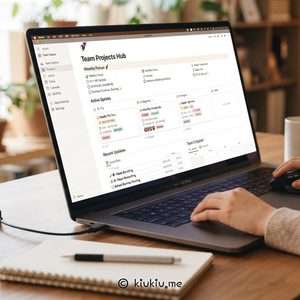
That might mean short practice sessions on busy weekdays and longer sessions for gesture drawing or watercolor when I have more time. I’ll start by figuring out how often I can realistically practice, rather than committing to hours of drawing every day. If you enjoy keeping track of creative projects, I’ve also shared some of the ways I organize hobbies and personal projects in Notion.
Learning a New Language
Is there a country you love visiting, or somewhere you’ve been hoping to travel to? Have you ever wished you could communicate more easily while traveling, or understand more of the local culture? If so, learning that country’s language could be a really interesting New Year’s resolution.
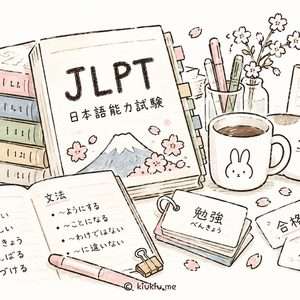
Learning Japanese had been on my bucket list for a long time. I finally started studying it a few years ago and decided to use the JLPT—the Japanese-Language Proficiency Test—to give my studies more structure. I worked my way up through N1, and having an exam to prepare for helped me decide which books to finish and how much to study each day.
Of course, studying for an exam and speaking comfortably are different things. Even after reaching N1, I still feel that my Japanese speaking needs more practice. So if you’re considering a new language this year, I’d start by thinking about what you want to do with it. Preparing for a test, ordering food during a trip, and reading novels in the original language will all lead you toward slightly different study routines.
If Japanese interests you, you can check out my JLPT study-material recommendations and my post on what to expect on JLPT exam day. I wrote those based on my own experience preparing for the test.
And for anyone interested in learning Korean, I’ve also created a Korean-learning workbook to help beginners get started. You can find it in the Learn Korean section of my shop. I think language study can be a wonderful long-term project, especially when you have somewhere or something you’re excited to use it for.
📝 Related Posts in This Section →
4. Look Back on the Past Year
Before filling my planner with new goals, I also want to look back at what happened in 2026. I don’t always have time to reflect on things as they’re happening, but looking through old journal pages or my camera roll at the end of the year brings back all sorts of memories.
I like scrolling through photos in date order or flipping through an old planner. It’s interesting to see where I went, which hobbies took up most of my time, and what was happening during particularly busy weeks. Sometimes a day I hardly remember turns out to have a photo or a quick note that brings the whole experience back.
I’m thinking of writing down a few questions while I look through the year:
- What was the most enjoyable moment of the year?
- What turned out to be better than I expected?
- Where did I spend most of my time, and what did I wish I’d done more often?
- Which activities or habits would I like to continue next year?
I also want to look at the plans I didn’t keep. Was I short on time? Did I try to do too much at once? Or did my interests simply change? Those details are more useful to me than making another list of things I didn’t finish.
Another nice way to look back is to collect travel photos, tickets, and little mementos from the year. In my post about creative travel journaling ideas, I shared different ways to keep those memories together. Some of the ideas work just as well for an end-of-year memory page, even if you didn’t go anywhere far away.
📝 Related Posts in This Section →
5. Give Your Space a Good Declutter
The end of the year always makes me want to give the house a proper tidy-up. I have a lot of stationery and art supplies, so my desk and drawers can get cluttered pretty quickly. Before buying more storage boxes or organizers, I’d like to go through what I already own.
Between colored pencils, paint, sketchbooks, stickers, notepads, and washi tape, there can be quite a lot to sort. And sometimes I find something I completely forgot I had. It’s a little like getting a new stationery item without spending anything. 😂
I’ve found that tackling one small area at a time is much more manageable than pulling everything out at once. One drawer or one section of the desk is a reasonable place to start, especially if you want to finish sorting it on the same day.
A Small-Space Decluttering Plan
- Take everything out: See what’s actually in that drawer or on that shelf.
- Separate the things you use often: Keep your favorite, everyday supplies within easy reach.
- Check for duplicates: You may discover that you already own several versions of the same thing.
- Put things back where they’re easy to access: If you have to move five boxes to reach a pencil, the setup probably won’t last.
After organizing a space, I like to think about whether it’s actually easier to use. A tidy-looking shelf isn’t particularly helpful if it’s inconvenient to get supplies out and put them away. I touched on this in my post about decluttering and its benefits, which goes into the subject in more detail.
📝 Related Posts in This Section →
6. Put Something Fun on the Calendar
When you open a new planner and think about the year ahead, how about adding something you’re genuinely looking forward to? It could be a big plan, like an overseas trip or spending a month somewhere new. But a short outing or something that seems small to someone else can be just as exciting to you.
Maybe there’s an exhibition or concert you’ve wanted to see. Perhaps you’ve been curious about a workshop, or there’s a friend you haven’t seen in ages. I find that these plans are easy to put off when I keep telling myself I’ll make time “someday.”
Here are a few ideas you could actually put on the calendar:
- Book a one-day class you’ve been interested in.
- Visit an exhibition or go to a concert you’ve wanted to see.
- Spend an afternoon exploring a neighborhood you’ve been curious about, then try a restaurant there.
- Reserve the second Friday evening of every month for a favorite hobby.
- Pick a date for a short trip or a family outing.
This is a little different from choosing a skill to improve. There’s no progress to measure or result to work toward. The whole point is to have something enjoyable to look forward to. With so many interests, I sometimes find myself treating hobbies like another item on my to-do list. I’d like to keep a little more room for doing things simply because they’re fun.
Once you’ve decided on something, put an actual date in your calendar. “I should go there sometime” is much easier to forget than a plan you’ve already made.
7. Check Your New Year Fortune for Fun
Do you ever look up your fortune around New Year’s? I tried a fortune reading for the first time this year, and it was much more entertaining than I expected! I don’t believe every prediction, but I really enjoyed hearing about the different interpretations and traditions.
One concept that comes up in Korean Saju, or Four Pillars fortune-telling, is the Five Elements: Wood, Fire, Earth, Metal, and Water. They’re associated with traditional symbolic qualities such as growth, passion, stability, structure, and wisdom. Knowing a little about those associations can make the explanation easier to follow.
I was already familiar with the basic idea of the Five Elements, but my fortune reading made me much more curious about them. That curiosity eventually led me to look into gemstone symbolism and how different stones and colors are associated with the elements. I wrote more about those traditional connections in my article on the Five Elements and gemstone meanings.
I see fortune readings as something fun to explore, rather than a reliable way to predict what will happen. If I hear something encouraging, that’s nice; if something sounds worrying, I don’t feel the need to take it too seriously. It’s also an interesting conversation to have with friends or family around the new year.
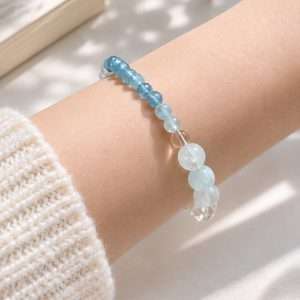
If you enjoy gemstones, choosing one in a favorite color or one with a symbolic meaning you like can be a fun little addition to your New Year preparations. Personally, I enjoy looking at the different colors and patterns as much as reading about their meanings.
📝 Related Posts in This Section →
Starting the New Year Your Own Way
After writing about all these ideas, I’m getting pretty excited for 2027. I want to sort out my planners and make a better drawing schedule after letting that habit slip in the middle of this year. I’m also curious how many notebooks I’ll end up using. Haha.
I enjoy making plans, but I’m sure I’ll adjust some of them as the year goes on. I might discover a new hobby, become interested in something completely different, or decide that an old favorite deserves more of my time. I’m looking forward to seeing what I learn and make in the next twelve months.
What are you most looking forward to in 2027?
📝 Must-Try Journaling Ideas & Inspiration
- How I Use Notion to Organize My Life, Projects, and More
- Travel Journal Ideas: 8 Creative Ways to Capture Your Trips
- Hobonichi 2027 Lineup Preview: New Covers, Collaborations & Planners
- Sourdough Journal for Home Bakers: Track Starter, Levain, and Bake in One Place
- Kids Activity Planner for Parents: A Summer Schedule for Better Home Days
Want to level up your journaling practice? Explore tips, prompts, and organization ideas: Browse All Journaling Tips
🧹Favorite Decluttering & Organization Hacks
- Best Washi Tape Dispenser: Kokuyo Bobbin Review
- How to Declutter a Closet When It Feels Too Overwhelming to Start
- How to Organize Skincare Products for a Stress-Free Routine
- Skincare Decluttering: What Stayed and What Had to Go
- Brain Dump Technique: Simple Steps to Organize Thoughts
Want a clutter-free and intentional lifestyle? Explore minimalism, organization tips, and decluttering hacks to reshape your space and priorities: Browse All Decluttering & Organization Tips
Explore More in Life Plan


Latest Updates:
Featured Videos: