Sourdough Journal for Home Bakers: Track Starter, Levain, and Bake in One Place
 April 27, 2026
 Cutting back on flour sounded manageable until bread became the problem. I could swap noodles more easily, but finding the kind of bread I actually liked was harder than I expected. I love sourdough and ciabatta, and after struggling to remember what worked, what failed, and what my starter was even doing from one bake to the next, I ended up making a sourdough journal to keep everything in one place.
🔍 Continue Exploring These Series →
- No Flour Diet Experience: One Month Later
- No Flour Diet While Traveling: How I Maintain It Without Quitting
- Sourdough Journal for Home Bakers: Track Starter, Levain, and Bake in One Place (reading now)
Table of Contents
What Made Sourdough So Hard to Track
Sourdough was one of those things that looked simple from the outside but felt much harder once I actually started doing it. There were so many small variables to pay attention to, and at first I did not really know which ones mattered most. That made it hard not only to improve, but even to remember what had happened from one bake to the next.
Too Many Details
One of the hardest things about learning sourdough was that so many parts of it felt a little unclear at first. Making the starter alone took me around ten days, and even then I did not always feel sure about what I was looking at. Some days it seemed active, some days it looked slower, and I kept second-guessing whether it was actually ready or not. Then there was the levain, which somehow felt even trickier. It was not just about feeding it. It was about timing, temperature, rise, smell, and trying to figure out when it had reached the right point to use.
The bigger problem was that every bake started blending together in my head. I would finish one loaf and then later realize I could not clearly remember what I had done. Did I use a little less water that time? Was the dough stronger because I mixed it differently, or because the levain was in a better spot? Did I let it ferment too long, or did I shape it too early? Those details sound small, but in sourdough they add up fast.
Clear Failures
I have had loaves come out so dense they felt almost like rocks, and I have also had over-fermented dough turn into bread with a sourness that was much stronger than I wanted. Those were the moments that made me realize sourdough is not hard only because of technique. It is hard because you are trying to learn from a moving target. Starter strength changes. The kitchen temperature changes. Dough behaves differently. If you do not have a way to look back, it becomes much harder to see patterns.
That was really the turning point for me. I did not just need recipes. I needed a way to record what actually happened.
Why I Made This Sourdough Journal
I wanted something that would let me keep those details in one place instead of scattering them across random notes, photos, and vague memory. I also wanted it to feel useful rather than overwhelming. If a tracker is too complicated, I know I will stop using it. So I wanted pages that were detailed enough to help me learn, but still simple enough that I would actually fill them out.
Why Photos Help
Another big reason was that I personally like recording things with photos. For me, a written note helps, but a photo often helps more. A photo of the starter, the levain, the dough texture, the crumb, or the finished loaf can instantly remind me what was going on in a way words sometimes do not. That is why I made space for photo-based tracking too. I wanted this journal to be something I could actually use while baking, not just admire as a printable.
What’s Inside This Sourdough Journal
Starter and Levain Pages
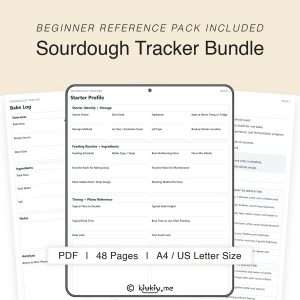
This sourdough journal includes several pages designed to help track different parts of the process, from starter care to final bake results. Instead of focusing only on the end loaf, it gives space to follow the steps that lead up to it, which is often where the most helpful clues are.
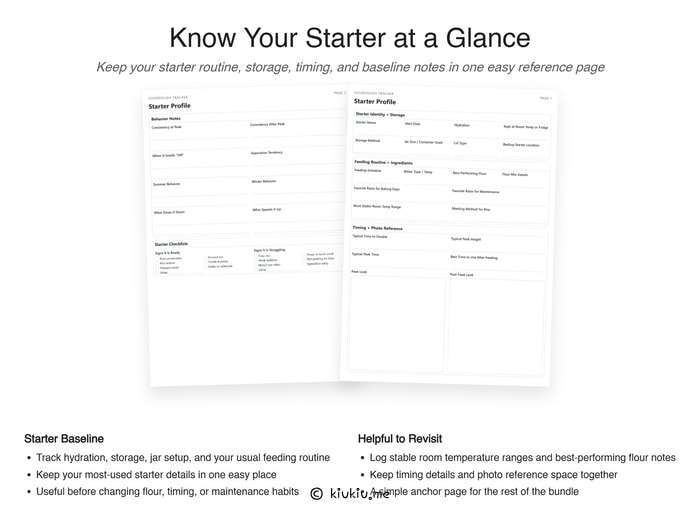
The starter profile page is there to help record the basic personality of your starter. That might sound funny, but after working with one for a while, it really does start to feel that way. You begin noticing how fast it rises, how it smells when it is happy, what flour mix you tend to use, and how it behaves under your usual routine. Having a place to write those things down makes it easier to stop treating every bake like a total reset.
There is also a starter feeding log, which is useful for tracking how often you feed it, what ratio you use, how quickly it rises, and what kind of activity you are seeing. This can be especially helpful when you are still trying to understand whether your starter is strong enough for baking or just active enough to look promising.
The levain build tracker focuses on one of the parts I found most confusing in the beginning. Levain can change quickly, and if your timing is off, that can affect the whole bake. Being able to note the feeding time, ratio, growth, appearance, smell, and peak timing helps a lot when you are trying to connect the levain stage to the final result.
Bake and Troubleshooting Pages
The bake log is where everything comes together. This is the page for recording ingredients, hydration, fermentation notes, shaping observations, baking conditions, and how the loaf actually turned out. This part matters because it helps connect process to outcome. A loaf is not just good or bad. It is the result of many small decisions, and the bake log gives those decisions somewhere to live.
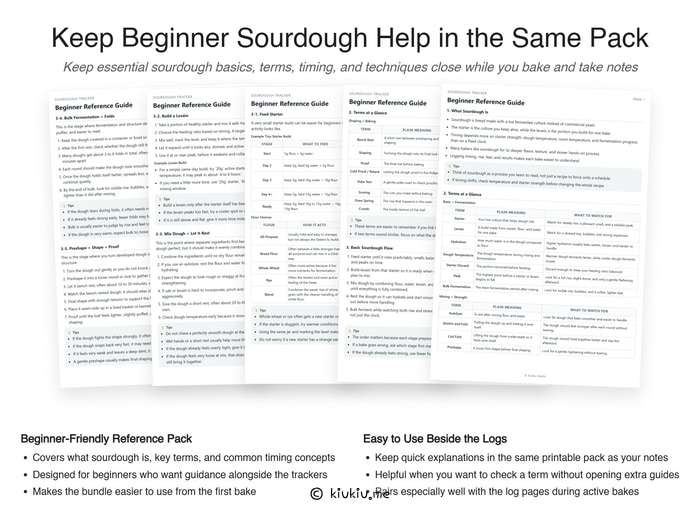
There are also readiness clue pages and reference-style pages that are meant to be beginner-friendly. One of the hardest parts of sourdough when you are starting out is not knowing whether something is normal. Is this starter active enough? Is this levain ready? Is this dough too slack? Is this timing off? Having pages that help frame those questions can make the whole process feel less vague.
Lastly, I included pages around common mistakes and fixes. I wanted something that acknowledged reality. Sometimes the dough is too wet. Sometimes the rise is weak. Sometimes the timing is off. Sometimes the loaf is just not what you hoped for. That does not mean the bake was useless. If you can record what happened and compare it to later results, those frustrating loaves can still teach you something.
The Two Versions I Made
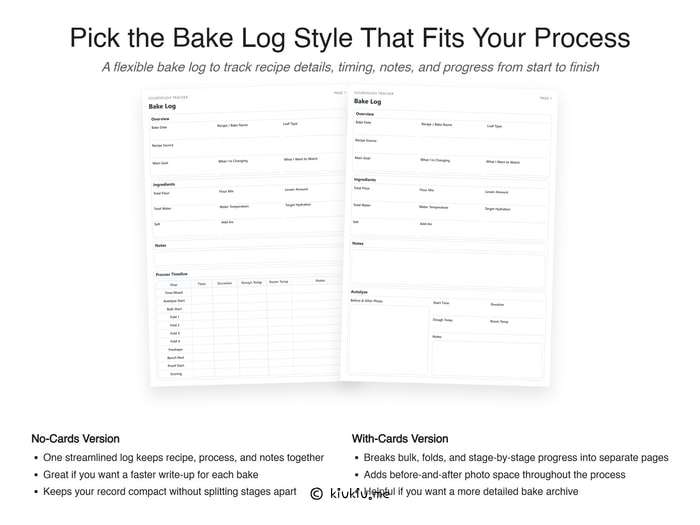
Table Version
One thing I wanted from the beginning was flexibility, so I made two log styles. The first version is simpler and more text-based. This is useful if you prefer writing quick notes and keeping things minimal. Sometimes that is enough. You may just want to record the numbers, timing, and a few short observations so you can move on.
Photo Card Version
The second version includes photo card spaces. This is the version I am using the most right now because it fits how I like to track things. I can add photos of the starter, the levain, the dough before shaping, the loaf after baking, and even crumb shots. That kind of visual comparison makes a huge difference for me. It turns past bakes into something I can actually study rather than vaguely remember.
I like that both options are there because people do not all track in the same way. Some want speed. Some want detail. Some want the process to be mostly visual. Some want to write more. I wanted the journal to work with those different habits instead of forcing only one system.
How I Use It in GoodNotes
I have been using this sourdough journal in GoodNotes, and that has worked especially well for the way I like to bake and record things.
Why I Use It Digitally
Right now I am mostly using this sourdough journal in GoodNotes, and that has worked really well for me. Since I like adding photos, the digital setup makes that much easier. I can drop in pictures from each stage and compare them more directly with older bakes. That is especially helpful when I am trying to judge things like rise, crumb, dough texture, or how the crust turned out.
I also like being able to scroll back through previous entries without flipping through loose papers. When I am planning another bake, it is much easier to review what happened last time and see whether I want to repeat something or change it. I do not have to guess as much, and I do not have to trust my memory to hold onto every small detail.
Flexible, Not Rigid
That said, I do not use every page in exactly the same way every time. Sometimes I keep it simple and focus on the most important notes. Other times I add more photos and observations. For me, that flexibility matters. I wanted this to feel like a useful tool, not homework.
How It Helped Me Improve My Last Bake
One of the most useful parts of keeping a sourdough journal has been being able to look back at a previous bake and make one clear adjustment instead of guessing again.
Looking Back
One of the best examples of why I wanted this tracker happened recently. When I looked back at a previous bake, I realized the dough had been too wet for what I wanted. I had remembered that the result was not quite right, but looking at the notes and photos made it much easier to see what the issue actually was. The dough had been softer than I liked, and the final loaf was not giving me the texture I wanted.
One Small Change
So the next time, I adjusted just one thing. I reduced the water by 10g.
That small change made a noticeable difference. The dough still had enough moisture, but it felt more balanced and easier to work with. The final bread came out appropriately moist while still having a bit more body and structure, which was much closer to what I had been hoping for. It was not some dramatic breakthrough, but honestly, that is exactly why it mattered. Sourdough improvement often comes from small adjustments, not huge reinventions.
Without the previous record, I probably would have just baked again and hoped for the best. With the journal, I was able to make a more intentional choice. That is the kind of progress I wanted from the start.
Who This Sourdough Journal Is For
Still Learning
I made this with home bakers in mind, especially people who are still figuring things out and want a better way to learn from each bake. If you are new to sourdough and feel like everything is happening too fast or too vaguely, this kind of tracker can help slow it down and make it easier to understand.
Comparing Results
It is also a good fit for people who like comparing bakes over time. Maybe you change hydration slightly, try a new feeding ratio, adjust bulk fermentation, or test a different shaping method. Having a place to store those changes makes it much easier to see what is actually helping.
Photo-Based Bakers
And if you are someone who likes photo-based notes, I think this setup can be especially useful. Sometimes one picture tells you more than a whole paragraph of explanation. Seeing the dough side by side with the final result can help connect the process in a much clearer way.
This is probably less about perfection and more about building a better record. That is really the heart of it.
How to Get the Template
If this sourdough journal sounds like something that would help with your own baking, you can find the template through the link below.
Shop Sourdough Journal on My Store
After downloading it, you can print the pages at home or use them digitally in a PDF annotation app like GoodNotes. You can also reuse the pages that fit your baking style best, whether you prefer quick notes, photo tracking, or more detailed bake records.
Final Thoughts
Sourdough has been fun, but it has definitely not felt easy. There are still plenty of things I am learning, and I still have bakes that do not turn out the way I want. But making this sourdough journal has helped the process feel less scattered and more useful. Instead of repeating the same mistakes without fully understanding them, I now have a way to look back, compare, and make small changes with more confidence.
That is what I wanted this tracker to do. Not magically fix every loaf, but help make the learning process clearer. If you are baking at home and keep finding yourself wondering what happened last time, this kind of journal can make a real difference. Sometimes the most helpful thing is not another recipe. Sometimes it is simply having a place to track your starter, levain, and bake in one place.
🛍 KIUKIU Store Picks & Updates
- Printable Knitting Journal: For Knitters Who Want to Keep Every Project
- Nail Art Planner: Printable Nail Design Template + Color Swatch Sheets
- Knitting Journal Notion Template: Your Complete Knitting Tracker
- Notion Board Game Tracker: Best Way to Organize Your Collection
- Kids Activity Planner for Parents & Teachers (Notion Template)
Curious about my latest product releases? Browse all kiukiu store posts for announcements and updates.
🧹Favorite Decluttering & Organization Hacks
- Best Washi Tape Dispenser: Kokuyo Bobbin Review
- How to Declutter a Closet When It Feels Too Overwhelming to Start
- How to Organize Skincare Products for a Stress-Free Routine
- Skincare Decluttering: What Stayed and What Had to Go
- Brain Dump Technique: Simple Steps to Organize Thoughts
Want a clutter-free and intentional lifestyle? Explore minimalism, organization tips, and decluttering hacks to reshape your space and priorities: Browse All Decluttering & Organization Tips

Explore More in KIUKIU





Explore More in Life Plan




Featured Videos: