Hobonichi Weeks vs Weeks Mega: Who Really Needs Mega?
 March 2, 2026
When people search Hobonichi Weeks vs Weeks Mega, what they’re really asking is this: do I actually need 240 extra pages, or am I about to carry unnecessary bulk for an entire year? I’ve used both formats—Weeks Mega in 2024 and the regular Weeks in 2026—and the difference turned out to be less about specifications and more about how I was planning at the time.
At first glance, the two planners look almost identical. Same weekly layout. Same monthly spreads. Same size. Same paper. But once you start using them daily, the extra notebook section in the Mega changes how you treat the planner. And that shift can either support your system—or quietly complicate it.
If you’re trying to decide which Hobonichi Weeks should you get, this Hobonichi Weeks planner comparison is based on actual long-term use, not just flipping through pages in September.
You can also explore my Hobonichi Techo series page to see how my system evolved.
📚 Keep Reading in This Series →
- Hobonichi Weeks 2025: Why I’m Skipping It, Pros, and Cons
- Hobonichi Weeks 2026 Review: Purchase & First Look
- Hobonichi Weeks vs Weeks Mega: Who Really Needs Mega? (reading now)
Table of Contents
- Hobonichi Weeks vs Weeks Mega: What’s the Real Difference?
- Why I Chose Hobonichi Weeks Mega in 2024
- When Hobonichi Weeks Mega Actually Makes Sense
- If You Want Planning and Journaling in One Book
- If You Write Long or Frequent Notes
- If You’re Building a Planning Habit
- If Extra Thickness Doesn’t Bother You
- Why I Switched to Regular Hobonichi Weeks in 2026
- When Regular Hobonichi Weeks Is the Better Choice
- If You Journal Separately
- If You Prefer a Lighter Carry
- If Cover Design Matters to You
- If You Use the Notes Section Strategically
- Hobonichi Weeks vs Weeks Mega: Which One Should You Get?
- Final Thoughts After Using Both
Hobonichi Weeks vs Weeks Mega: What’s the Real Difference?
Structurally, both planners share the same foundation: monthly spreads at the front, weekly layouts (vertical weeks across two pages), and a grid notebook section in the back. The only real difference is how much notebook space you get—and how that affects thickness and weight.
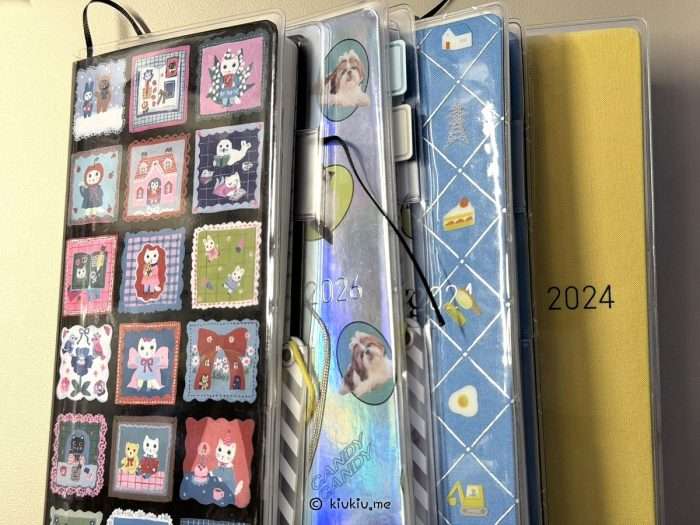
Here’s a clear breakdown.
| Feature | Hobonichi Weeks | Hobonichi Weeks Mega |
|---|---|---|
| Weekly Layout | Yes | Yes |
| Monthly Layout | Yes | Yes |
| Total Note Pages | 73 ~ 75 pages | 215~219 pages |
| Total Pages | appx 200 pages | appx 340 pages |
| Thickness | Slim | Significantly thicker |
| Weight | Lightweight | Slightly heavier |
| Cover Options | Wider variety | More limited selection |
| Best For | Planning-focused users | Planning + heavy notes/journaling |
Mega gives you 219 note pages in English version—about three times the notebook space of the regular Weeks. Everything else is identical. That’s why this decision is not about layout preference—it’s about usage behavior.
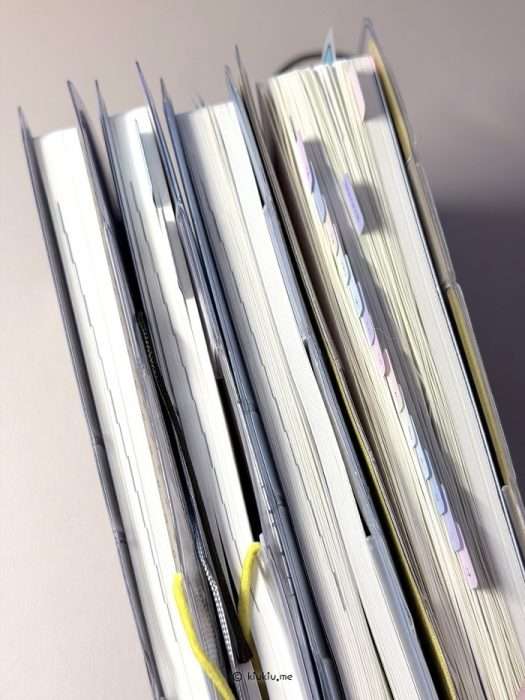
If you fill notebook pages quickly, 75 pages can disappear before autumn. If you don’t, 200 pages can sit untouched and add unnecessary bulk.
Why I Chose Hobonichi Weeks Mega in 2024
In 2024, I chose the Mega because I wanted everything in one place. Planning and journaling together. No separate systems. No extra notebooks.
That year, I had made a conscious decision to start using my planner more intentionally. I was building the habit. And I knew myself well enough to understand this: if I separated my journal from my planner too early, I might stop journaling altogether.
So I combined them.
Weekly spreads for planning. The 200+ page notebook section for daily reflections, longer thoughts, and occasional brain dumps. It felt simple and contained. One book. One system.
It worked.
Looking back at my full 2024 Weeks Mega review, that year wasn’t about optimization. It was about consistency. The Mega removed friction. I didn’t have to decide where to write. I just opened the planner and used it.
If you’re in that stage—building a new planning habit—the Mega can be incredibly helpful. It lowers resistance. And in the beginning, that matters more than minimalism.
📝 Related Posts in This Section →
When Hobonichi Weeks Mega Actually Makes Sense
If You Want Planning and Journaling in One Book
If you prefer carrying only one notebook for everything—appointments, reflections, project notes—the Mega supports that cleanly. You won’t run out of space halfway through the year.
If You Write Long or Frequent Notes
Some people use the back section like a compact workspace. Bullet journaling spreads, quick work notes, meeting logs, project plans—because the Weeks is so portable, it often becomes the notebook you grab during the day. If you regularly fill pages like that, the regular Weeks’ ~75 pages can feel limiting. The Mega’s 219 pages simply give you more breathing room.
If You’re Building a Planning Habit
This was my exact situation in 2024. One book reduces decision fatigue. One book makes it easier to stick with the system. Separating too early can create friction.
If Extra Thickness Doesn’t Bother You
The Mega isn’t dramatically heavy, but it is noticeably thicker. If you carry your planner daily in a small bag, you will feel the difference. If your planner mostly stays on your desk, this won’t matter.
Why I Switched to Regular Hobonichi Weeks in 2026
The shift didn’t happen overnight.
Skipping Hobonichi in 2025
In fact, I skipped Hobonichi entirely in 2025.
I explained that decision in my “Why I Skipped Hobonichi in 2025” post, but the short version is this: I needed to reset my system. By the end of 2024, I had proven to myself that I could stay consistent. What I hadn’t figured out yet was how I wanted planning and journaling to coexist long term.
So 2025 became an experiment. My planner lineup looked different that year, and journaling officially moved into its own notebook. You can see what I used instead in my 2025 planner lineup post.
That year clarified something important.
Separating Journaling Changed the Math
Separating journaling didn’t weaken my consistency. By then, the habit was already established. I no longer needed to attach journaling to my weekly planner just to keep it going.
Once journaling lived independently, the Mega stopped making sense. I wasn’t using anywhere close to 219 notebook pages. Instead, I began using the note section more selectively—primarily for planning support rather than extended writing.
That kind of usage simply doesn’t require Mega-level space.
Returning to Hobonichi in 2026
When I returned to Hobonichi in 2026, I chose the regular Weeks. The ~73 notebook pages became more than enough for how I plan now. If you’re curious about the details, you can check out how I set up my Hobonichi Weeks in 2026 in a separate post.
There was another deciding factor: design.
The Mega lineup tends to have more limited cover selections. In 2026, there was a specific design I genuinely loved—and it was only available in the regular Weeks format. That alone tipped the scale.
When you use a planner every single day, aesthetics aren’t superficial. They influence how often you reach for it and how connected you feel to the system.
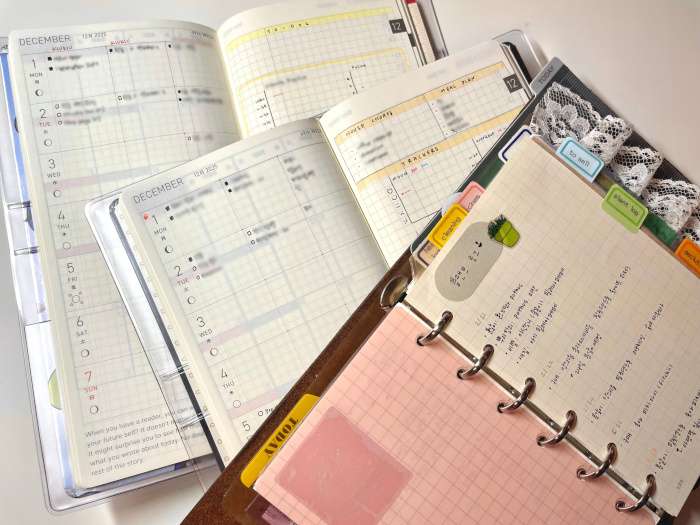
In my 2026 planner lineup post, you can see how the regular Weeks fits into my broader setup, where each notebook has a distinct role. Within that structure, the additional notebook pages in the Mega simply weren’t necessary anymore.
📝 Related Posts in This Section →
When Regular Hobonichi Weeks Is the Better Choice
If You Journal Separately
If your daily journaling already lives in another notebook, the Mega’s extra pages become redundant. You’ll likely underuse them.
If You Prefer a Lighter Carry
The regular Weeks is noticeably slimmer. It fits easily into smaller bags and feels closer to a wallet-sized companion.
If Cover Design Matters to You
Certain collaborations and special designs are exclusive to the standard Weeks lineup. If you’re drawn to a particular cover, that may settle the decision immediately.
If You Use the Notes Section Strategically
If your notebook pages are structured—indexes, goal maps, trackers—you probably won’t need 240 pages. The standard ~73 pages can go surprisingly far when used intentionally.
Hobonichi Weeks vs Weeks Mega: Which One Should You Get?
Let’s make this clear and practical.
Choose Weeks Mega if:
- You want planning and journaling in one book
- You write long or frequent daily notes
- You dislike managing multiple notebooks
- You’re building a new planning habit and want simplicity
Choose Regular Weeks if:
- You already journal separately
- You prefer a slimmer, lighter planner
- You care about having access to more cover designs
- You use the notebook section for structured planning only
If you’re still undecided, ask yourself how you filled your last planner. Did you run out of pages? Or did you leave many blank?
Be honest about your writing volume.
And if you’re questioning the entire Weeks format, not just Mega vs regular, I’ve compared other brands in my 2026 planner comparison post where I looked at value, fountain pen friendliness, and portability across different systems. That might help if neither Weeks format feels quite right.
📝 Related Posts in This Section →
Final Thoughts After Using Both
The decision between Hobonichi Weeks vs Weeks Mega isn’t about which planner is better. It’s about where you are in your planning journey. In 2024, I needed Mega because I wanted everything in one place while building consistency. In 2026, I don’t.
My system is more defined now, journaling is separate, and the regular Weeks supports that structure without unnecessary excess. If I had separated everything too early, I might not have stayed consistent. Your planner should match your current habits—not the version of yourself you wish you were. If you’re honest about that, the right Hobonichi Weeks becomes clear.
📝 Must-Try Journaling Ideas & Inspiration
- Travel Journal Ideas: 8 Creative Ways to Capture Your Trips
- Hobonichi 2027 Lineup Preview: New Covers, Collaborations & Planners
- Sourdough Journal for Home Bakers: Track Starter, Levain, and Bake in One Place
- Kids Activity Planner for Parents: A Summer Schedule for Better Home Days
- Printable Knitting Journal: For Knitters Who Want to Keep Every Project
Want to level up your journaling practice? Explore tips, prompts, and organization ideas: Browse All Journaling Tips
🖊️ Popular Stationery Reviews
- Planner Supplies I Regret Buying (and Why I’m Keeping Them)
- 2026 Mid-Year Stationery Favorites: 3 Products I Actually Use
- Traveler’s Notebook Card Size Review | 20th Anniversary Set
- Best Washi Tape Dispenser: Kokuyo Bobbin Review
- My Favorite Planner Accessories for Everyday Planning
Looking for the best stationery to enhance your journaling experience? Check out all my Stationery Reviews for detailed insights, product recommendations, and tips to help you choose the perfect tools for your creative projects!
Explore More in Life Plan

Latest Updates:



Featured Videos: