Kids Activity Planner for Parents: A Summer Schedule for Better Home Days
 April 13, 2026
This year’s spring break felt a little harder before it even started. We already had car maintenance scheduled that week, which meant I would not be able to drive my child around much. Since we would be spending more time at home than usual, I wanted a better way to plan our days. I did not want to just fill time. I wanted a simple summer schedule for kids that could help me prepare meaningful activities at home, not only for spring break, but for the longer school breaks ahead too.
💡 Resources You Might Find Helpful →

Table of Contents
- Why I Made This Kids Activity Planner
- Printable And Digital Options
- What’s Included In The Planner
- Brainstorm Page
- Supplies Page
- Weekly Planner
- Weekly Timetable
- Daily Planner
- End-of-Week Reflection
- Activity Coupons
- Using The Planner During School Breaks
- Printable or Digital: Choosing The Right Format
- How to Get the Template
- Creating A Better Summer Schedule For Kids
Why I Made This Kids Activity Planner
Before making the planner itself, I kept thinking about what would actually be helpful during school breaks. I did not want pages that looked nice but were hard to use in real life. I wanted the structure to support planning in a way that felt flexible, low-pressure, and easy to return to throughout the week.
Practical Planning
I wanted something practical. Not a perfect parenting system, not a rigid schedule, and definitely not a planner that makes you feel bad for not doing enough. I wanted a tool that helps parents think ahead just enough to make the day easier.
Real-Life Limits
A lot of activity ideas online look great in theory, but real life is different. Some activities need more supplies than you have on hand. Some are too messy for that particular day. Some sound fun until your child loses interest after ten minutes. Some are wonderful, but you only remember them after you are already tired and the day has started slipping away. That is where planning can really help.
Smoother Home Days
This planner came from that exact gap between wanting good home days and not always having the time or mental energy to create them on the spot. I wanted a place to collect ideas, note what we already have at home, think through the week a little, and keep daily plans simple enough to follow without feeling boxed in.
Different Planning Styles
I also wanted the planner to work for different kinds of families and different styles of planning. Some people like printing pages and writing things out by hand. Some prefer staying inside a note-taking app and jumping between linked pages more quickly. That is why I made two versions with the same basic structure.
Printable And Digital Options
There are two versions of this planner, and the core layout is the same in both.
1-Week Printable Planner

The first version is a one-week printable planner that also includes activity coupons. Even though I designed it as a printable option, it can absolutely be used in apps too if you prefer writing on PDFs digitally. This version is nice for parents who want something simple, quick, and easy to pull out right away. It feels approachable because you can focus on just one week at a time.
5-Week Digital Planner

The second version is a five-week planner made for app use, with hyperlinks built in for easier navigation. This one is great if you like digital planning and want a cleaner, more connected experience. Since school breaks can stretch on and summer especially can feel long, having five weeks already set up can help you think beyond just the next day or two.
Even though the format is different, both versions are built around the same idea: helping you plan better home days without making life more complicated.
What’s Included In The Planner
Both versions include the same core planning pages so that the system feels consistent no matter which format you choose.
Brainstorm Page

This is where everything starts. I wanted a space where parents could quickly list ideas without worrying about order yet. Sometimes the hardest part of planning with kids is not doing the activity. It is trying to think of one when you are already tired. Having a brainstorming page gives you a place to collect indoor ideas, outdoor ideas, quiet activities, sensory play, crafts, simple games, reading time, pretend play, baking, or anything else that fits your child.
It is also helpful because you do not have to come up with a perfect week all at once. You can just gather possibilities first.
Supplies Page
This is one of my favorite parts because it solves a very common problem. So many activity ideas sound good until you realize you are missing tape, glue, paper plates, paint, stickers, or some random household item. A supplies page helps you see what you need ahead of time and what you already have.
That one small step can make a huge difference. It turns activities from “maybe later” into something actually doable.
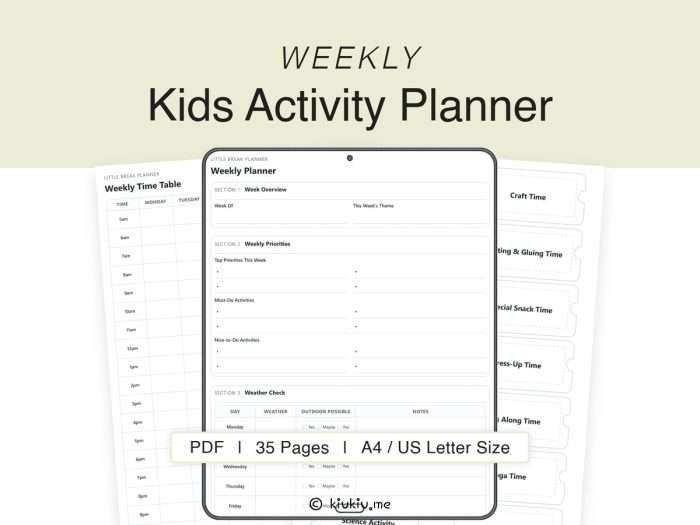
Weekly Planner

The weekly planner gives you a broad view of the week so you can spread things out instead of stacking all the high-energy or high-prep activities together. I like this because it helps you create a better rhythm. You might plan one messy activity, one low-prep activity, one quiet day, one baking day, and one outdoor break if the weather allows.
The point is not to fill every single box. It is to stop the week from feeling like one long blur.
Weekly Timetable
Some parents like seeing the flow of the day in a more time-based way, especially during breaks when the normal school routine disappears. The weekly timetable gives you a way to think about the day in chunks. Morning activity, lunch, quiet time, outdoor time, simple craft, reading, rest, or whatever works for your home.
I wanted this page to feel flexible. It is not about scheduling every hour like a classroom. It is more about creating a rhythm that helps the day move better.
Daily Planner

The daily planner lets you zoom in when needed. Some days need more structure than others, especially if your child does better when they know what is coming next. This page gives you room to focus on one day at a time without losing sight of the bigger week.
You can use it for a more detailed activity plan, a rough order of the day, notes on meals or snacks, or reminders about supplies and cleanup.
End-of-Week Reflection
This page is simple, but I think it matters. During school breaks, it is easy to forget what worked well and what did not. Reflection helps you notice patterns. Maybe your child loved activities involving water but lost interest in worksheets. Maybe the best days were the ones with one planned activity and lots of free time around it. Maybe something you thought would be a big hit was not worth the setup.
That kind of reflection makes the next week easier to plan.
Activity Coupons

The 1-week printable version also includes activity coupons, which add a fun extra layer. I like these because they turn planning into something more interactive. Instead of only writing activities on a schedule, you can present them in a way that feels playful and special.
Coupons can be especially useful for younger kids because they create a sense of choice and anticipation. You can use them as surprises, rewards, or just a fun way to let your child help decide what happens that day.
Using The Planner During School Breaks
One thing I kept thinking about while making this planner was how different home days can feel depending on whether you are prepared. A day at home does not automatically need to be packed with activities, but it helps so much to have a few good options ready.
During spring break, this planner can help when you know you will be home more than usual. Maybe your week is limited because of appointments, car issues, weather, or just general life. Instead of scrambling each morning, you can set up a small plan and reduce that mental load.
During summer break, the planner becomes even more useful because the break is longer and the need for variety becomes more obvious. Summer has a way of starting with big hopes and slowly drifting into repetition if you are not careful. That is not necessarily a bad thing, but a little planning can help you keep the days from feeling flat.
This planner is also useful because it supports different types of activity planning. You can use it to prepare:
- low-prep activities for tired days
- indoor activities for hot or rainy days
- quiet activities for slower afternoons
- sensory or hands-on activities for energetic mornings
- simple routines that make long breaks feel steadier
The goal is not to create a perfect break. The goal is to make it easier to enjoy the time you already have.
Printable or Digital: Choosing The Right Format
Since the core structure is the same, the best version really depends on how you like to plan.
Choose the Printable Version If…
The printable version is a great fit if you enjoy writing by hand, want something visible on the table or fridge, or like the flexibility of printing only the pages you need. Some weeks you may want everything. Other weeks you may only use the brainstorming page, weekly planner, and one or two daily pages. Even though it is designed as a one-week layout, you can print multiple copies and use it to plan as many weeks as you want.
The coupons are a great extra here too. They add charm and flexibility, and they make the planner feel especially fun for home use.
Choose the Interactive Digital Version If…
The five-week hyperlinked version is a better fit if you already use a tablet or note-taking app like GoodNotes and want something more connected. Hyperlinks make it easier to move between sections, which is especially helpful if you like having everything in one place.
This version also makes sense if you want to plan further ahead. Five weeks gives you more space to think through school breaks, summer rhythms, recurring ideas, and activity rotation without needing to start over constantly.
If you are the kind of person who enjoys digital organization and wants a planner designed specifically for app use, this is the smoother option.
📝 Related Posts in This Section →
How to Get the Template
If you would like to try this Kids Activity Planner for yourself, you can find the template through the link below.
Shop Weekly Kids Activity Planner on My Store
Shop 5-Week Kids Activity Planner on My Store
Once downloaded, you can choose whether to print the pages at home or use them digitally in a PDF annotation app. You can also reprint or duplicate the pages you use most often.
Creating A Better Summer Schedule For Kids
I made this planner because I wanted home days to feel a little easier and a little more intentional during school breaks. When routines change, even simple planning can make a big difference. A summer schedule for kids does not have to mean filling every hour. Sometimes it just means having a few good ideas ready, a flexible structure, and a better sense of how the week might flow.
If you are looking for a kids activity planner that helps you prepare for spring break, summer break, or everyday home time, I hope this one feels practical and easy to use. Whether you prefer the printable version or the hyperlinked digital version, the goal is the same: better home days with less last-minute scrambling.
🛍 KIUKIU Store Picks & Updates
- Printable Knitting Journal: For Knitters Who Want to Keep Every Project
- Nail Art Planner: Printable Nail Design Template + Color Swatch Sheets
- Knitting Journal Notion Template: Your Complete Knitting Tracker
- Notion Board Game Tracker: Best Way to Organize Your Collection
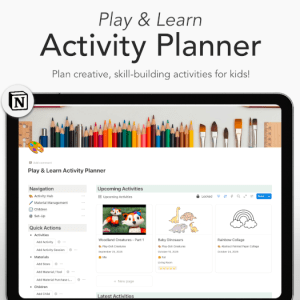
- Kids Activity Planner for Parents & Teachers (Notion Template)
Curious about my latest product releases? Browse all kiukiu store posts for announcements and updates.
💆♀️ Must-Try Mental Health & Mindfulness Practices
- Morning Pages Prompts: 100-Day Journaling Challenge (Free Download)
- Start a Miracle Morning Routine: My Honest Journey
- Morning Routine for Productivity: How I Start and End My Day
- How to Reduce Social Media Time and Regain Control of Your Life
- Best Hobonichi Weeks Layout Ideas for Your Needs
Want to reduce stress and gain mental clarity? Explore mindfulness practices, journaling techniques, and simple self-care habits: Browse All Mental Health Tips
Explore More in KIUKIU



Explore More in Life Plan






Featured Videos: