Free Mandala Chart Template for Your New Year Goals
 November 17, 2025
Every New Year, we set fresh goals — to read more, learn a new skill, stay healthy, or finally start that creative project we’ve been putting off. But as weeks go by, those resolutions fade. The Mandala Chart changed that for me.
Unlike a simple checklist, the Mandala Chart helps you turn vague wishes into clear, structured steps. It’s a visual system that keeps you focused on what truly matters throughout the year. I’m sharing my own story, how I used it over two years (not just one!), what I learned, and a free printable Mandala Chart template perfectly sized for Hobonichi Weeks — ideal for those who love to plan and reflect on paper.
📚 Keep Reading in This Series →
- JLPT Study Planner with Hobonichi: Timeline and Layout Tips
- Time Tracker for Hobonichi Weeks & A6 (Free Download)
- Free Mandala Chart Template for Your New Year Goals (reading now)
- Hobonichi Weeks 2026 Setup: How I Set Up My Planner for 2026
Table of Contents
- What Is a Mandala Chart (and Why It Works)
- How to Start Your Mandala Chart Template
- My Example: “Recording” as a Sub-Goal
- Achievements That Came from My Mandala Chart
- How I Maintain Momentum
- Free Printable Mandala Chart PDF
- Pros and Cons of Using a Mandala Chart
- Building Long-Term Habits with the Mandala Chart
What Is a Mandala Chart (and Why It Works)
The Mandala Chart, originally developed by Japanese writer and business consultant Matsumura Yasuo, is a framework designed to visualize your goals and actions.
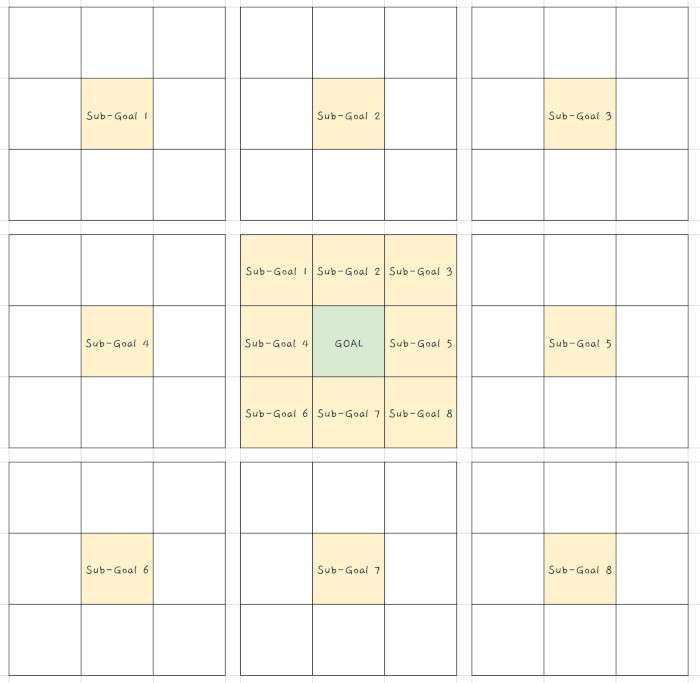
It’s built around a 3×3 or 9×9 grid — one main theme in the center, surrounded by eight supporting sub-goals.
I first discovered the Mandala Chart when I started using my Hobonichi Weeks. I was searching for a way to actually achieve the goals I wrote in my planner — something more structured than vague resolutions. That curiosity led me to try the Mandala method, and it immediately changed how I approached goal setting.
What makes this method powerful is how it naturally forces you to break big dreams into practical steps. Instead of writing a generic goal like “be healthier,” you divide it into smaller actions such as “cook at home three times a week,” “walk 30 minutes daily,” or “track mood and sleep.” These micro-goals connect to the larger purpose without feeling overwhelming.
The Mandala Chart works because it helps you see your goals as connected parts of your life, not isolated tasks. It turns abstract resolutions into a web of doable actions — one square at a time.
How to Start Your Mandala Chart Template
Creating a Mandala Chart isn’t about perfectly filling every square right away. It starts with reflection, brainstorming, and understanding what you truly want before putting anything on paper.
Step 1. Brainstorm Freely
Begin by writing down everything you want to do, improve, or experience this year. Include personal, creative, health, and learning goals—anything that matters to you. Don’t worry about structure yet; this is a free-flowing brain dump.
When I tried this for the first time, I filled an entire page with random thoughts—some realistic, some not. But that messy list helped me see what I actually wanted to focus on instead of what I thought I should do.
Step 2. Group and Find Patterns
Look over your brainstormed list and start grouping similar ideas. You’ll notice recurring themes like self-growth, health, or relationships. These patterns reveal where your energy naturally wants to go.
In my case, words like writing, journaling, and sketching kept showing up, so I grouped them under creativity. It made me realize that many of my goals were connected to expression rather than perfection.
Step 3. Choose Your Central Goal
Pick one theme that feels most meaningful right now. This becomes the center of your Mandala Chart. Around it, place eight related sub-goals that support your main vision.
For me, that theme was self-growth, and surrounding it, I added goals like recording, health, learning, and relationships. Seeing them organized this way turned scattered ideas into something I could actually act on.
Step 4. Define Small, Actionable Steps
Under each sub-goal, list small and realistic actions. Avoid vague commitments like every day, and use flexible ones such as three times a week or for ten minutes. The smaller the step, the easier it is to start—and starting is what builds consistency.
When I changed my wording from journal every day to write whenever I feel stuck, I stopped feeling guilty and actually began writing more often.
Step 5. Bring It into Your Planner
Once your chart is ready, print the Mandala Chart Template PDF and paste it somewhere you can see often. Keeping it in sight helps you stay mindful of your direction without treating it like a strict checklist.
That’s exactly what I did—mine sits across two pages in my Hobonichi Weeks, but you can easily adjust it to any planner or notebook. Some squares are filled, some still blank, and that’s perfectly fine. It’s not about finishing; it’s about staying aware of direction.
My Example: “Recording” as a Sub-Goal
One of my sub-goals in the Mandala Chart was “Recording.” I originally chose it not because I wanted perfect productivity, but because I needed a way to cope with anxiety and low mood. Writing became a form of self-care.
Instead of writing “journal daily,” which felt unrealistic, I broke it into small, flexible actions:
- Write about my feelings on very bad days.
- When I fail a daily goal, write one comforting line to myself.
- Use a brain dump when my thoughts are too cluttered.
Over time, this approach changed everything. I stopped seeing journaling as a chore and began using it as a way to breathe. It helped me process emotions, organize thoughts, and recognize small wins I used to ignore.
I even wrote a separate blog post about Brain Dumping — how it helped me unload mental clutter and think clearly. (I’ll link it here for readers who want to dive deeper.)
As I learned more about my journaling style, I also explored both digital and analog ways to record ideas. You can find that story on my blog, where I compare analog notebooks and digital planners — because both can coexist beautifully.
Achievements That Came from My Mandala Chart
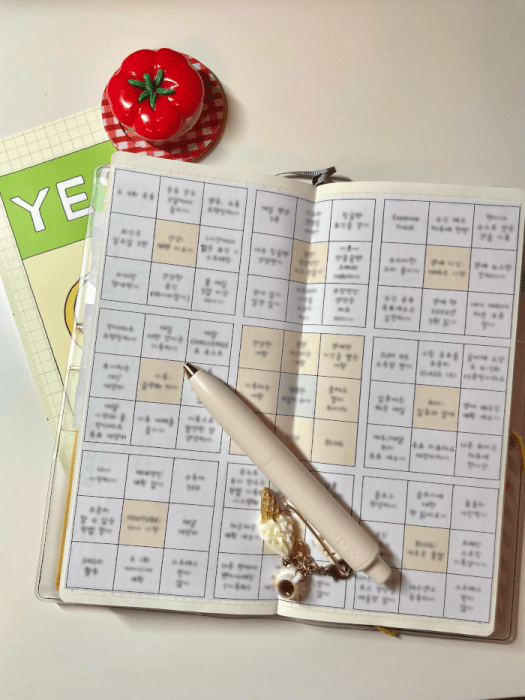
The most rewarding part of my Mandala Chart wasn’t just the feeling of being “organized.” It was seeing progress in areas I never thought I could manage.
Under my “Hobby” sub-goal, I wrote: “Study Japanese every day and track progress (target: JLPT N3).”
What started as a light hobby turned into a real achievement — I eventually passed JLPT N1. I definitely didn’t plan that far at first. But small, consistent study sessions piled up.
Another big success came from the “Blog” section of my Mandala Chart.
There, I had listed ideas like:
- Research blogs with designs I admire.
- Finish one feature or page per week.
- Read three books about writing and practice.
It took a while — actually more than a year — but I built my own blog, designed it the way I wanted, and even got AdSense approval later (which was never my original goal).
If I hadn’t broken everything into smaller pieces in my Mandala Chart, I probably would’ve quit halfway.
How I Maintain Momentum
Writing a Mandala Chart once isn’t enough. What matters is how you keep it alive throughout the year. I found that breaking it down into monthly planning, quarterly reviews, and small rewards helped me stay consistent without feeling pressured.
Monthly and Weekly Goals
Each month, I set smaller, low-pressure targets that match my current pace. Along with that, I plan weekly goals to help me start each week with clarity. If I know a certain week will be hectic—because of travel, work, or simply low energy—I plan a lighter version of my tasks instead of giving up completely. This flexibility lets me keep moving even when life doesn’t go perfectly. It’s less about doing more and more about doing what’s realistic for that moment.
Quarterly Reviews and Adjustments
Every three months, I take time to review my Mandala Chart and see how things are going. Sometimes I print a new copy or draw another chart and mark areas that are progressing well and those that feel stuck. I write notes about what’s been difficult, which parts turned out unrealistic, and where I can scale things down. Seeing it visually helps me understand whether I’m heading in the right direction and keeps me from being too rigid with my goals.
Small Rewards and Motivation
Whenever I complete a milestone or finish something that took effort, I give myself a small reward. It could be buying something I’ve wanted for a while, taking a slow afternoon off, or spending time on a relaxing hobby. These small moments of celebration help me associate goal-setting with enjoyment rather than pressure.
If something feels impossible, scale it down instead of quitting. A Mandala Chart isn’t about perfection — it’s about awareness. It reminds you that growth is flexible.
Pros and Cons of Using a Mandala Chart
Pros:
- Helps you visualize all areas of life clearly.
- Keeps your goals interconnected, not scattered.
- Encourages balanced growth rather than obsession with one area.
- Easy to review at a glance.
Cons:
- Can feel overwhelming if you fill all 81 squares at once.
- Some people treat it too rigidly, which causes burnout.
- It requires regular check-ins; otherwise, it becomes decoration.
My tip: Start small. Maybe fill only one big square at a time. As you complete one area, expand to the next. Flexibility is the secret.
Free Printable Mandala Chart PDF
I made a printable Mandala Chart template PDF based on the one I actually use. It’s simple and minimal, designed with enough space to think and write comfortably without unnecessary decorations.
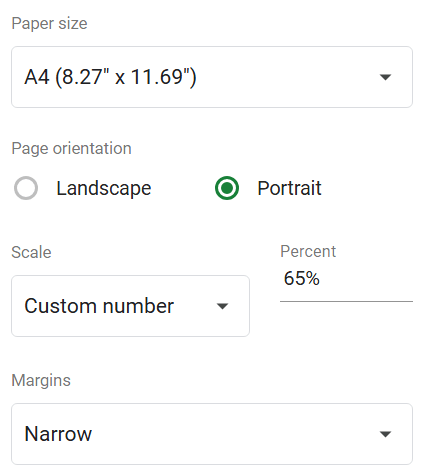
If you’re using a Hobonichi Weeks planner, you can print the template on A4 paper, set the scale to 65%, choose Narrow margins, and keep the Portrait layout. This size fits perfectly across two pages in the Notes section. It almost looks like it was made for it.
You can also print it on A5 paper or resize it for any other planner or notebook. The layout stays clean and easy to adapt. The idea is to keep your goals visible and revisit them as you plan throughout the year. Write your main theme in the center, fill in each section gradually, and don’t feel pressured to complete everything right away.
When I first made mine, it took nearly two years to fill every square. But that slower process made the chart more meaningful because each box represented real progress, not just ideas. So take your time — that’s part of what makes the Mandala Chart so powerful.
Building Long-Term Habits with the Mandala Chart
My Mandala Chart wasn’t perfect; it actually took me two years to finish. But that’s exactly why it worked. I stopped chasing the idea of completing every square flawlessly and focused on what truly mattered. Every time I opened my planner, the chart reminded me why I started certain habits, what I cared about, and how far I’d come. Even the incomplete boxes became gentle reminders of things I might revisit later. If you’ve ever felt intimidated by traditional goal-setting or yearly resolutions, try the Mandala Chart instead. You might find, as I did, that progress is less about how fast you move and more about how consistently you return to what matters. So print out the free template, paste it into your planner, and fill just one square today. Small steps, thoughtfully repeated, can lead to the biggest changes of all.
💆♀️ Must-Try Mental Health & Mindfulness Practices
- Morning Pages Prompts: 100-Day Journaling Challenge (Free Download)
- Start a Miracle Morning Routine: My Honest Journey
- Morning Routine for Productivity: How I Start and End My Day
- How to Reduce Social Media Time and Regain Control of Your Life
- Best Hobonichi Weeks Layout Ideas for Your Needs
Want to reduce stress and gain mental clarity? Explore mindfulness practices, journaling techniques, and simple self-care habits: Browse All Mental Health Tips
📝 Must-Try Journaling Ideas & Inspiration
- Morning Pages Prompts: 100-Day Journaling Challenge (Free Download)
- 2026 Planner Lineup: How I Set Up My Planners for the New Year
- Hobonichi Weeks 2026 Setup: How I Set Up My Planner for 2026
- Time Tracker for Hobonichi Weeks & A6 (Free Download)
- JLPT Study Planner with Hobonichi: Timeline and Layout Tips
Want to level up your journaling practice? Explore tips, prompts, and organization ideas: Browse All Journaling Tips
Explore More in Life Plan




Latest Updates:





Featured Videos: