Knitting a Balaclava with Aran Yarn: A Cozy Korean-Fit Winter Project
 January 26, 2026
Balaclavas are funny projects. They look simple enough that you might think you already know how they’ll turn out, but once you actually start wearing one, the details suddenly matter much more than expected. How dense the stitches feel, how heavy the piece becomes, and even how the ties behave can make the difference between something you reach for often and something that stays tucked away.
This project came together in late fall, right when the weather started shifting from cool to properly cold. I knit the same balaclava pattern twice in a row, keeping the instructions exactly the same but changing the needle size and yarn combination. That alone was enough to create two very different results, and comparing them turned out to be more interesting than I expected.
📚 Keep Reading in This Series →
- Last Knitting Project This Summer: Lightweight Sweater Pattern
- Bottom-Up Cardigan Knitting FO: My First Fall Project
- Knitting a Balaclava with Aran Yarn: A Cozy Korean-Fit Winter Project (reading now)
Table of Contents
- Project Info (Quick Facts)
- Version 1: Extra-Warm Balaclava for My Husband
- Fit and Needle Choice
- Yarn Combination and Weight
- Warmth and Everyday Wear
- Knitting Experience and Timeline
- Finishing and Ties
- Version 2: A Lighter, Everyday Balaclava for Myself
- Slower Start
- Needle and Yarn Choices
- Texture, Look, and Everyday Wearability
- Finishing and Year-End Wrap-Up
- Tubular Cast-On
- Yarn Notes: KnitPicks Simply Wool Aran
- Final Thoughts
Project Info (Quick Facts)
- Pattern: Korean Fit Balaclava Pattern by Banul Story
- Yarn:
- Large Size (for my husband): KnitPicks Simply Wool Aran (Color: Winnie) + Mohair (Color: Ivory)
- Basic Size (for myself): KnitPicks Simply Wool Aran (Color: Winnie)
- Needles:
- Large Size (for my husband): Lykke 6.5 mm
- Basic Size (for myself): Lantern Moon 5.0 mm
Version 1: Extra-Warm Balaclava for My Husband
Fit and Needle Choice
The pattern is written in a single size, so the most practical way to adjust the fit is by changing the needle size and how dense the stitches are. For this version, which I knit for my husband, comfort and warmth were the top priorities. He wanted something roomy and genuinely warm, especially as the weather got colder.
To get there, I sized up to a 6.5 mm needle. That one decision immediately changed the overall feel of the piece. The stitches opened up slightly without becoming loose, and the balaclava gained a comfortable amount of volume that worked well for extra coverage around the head and neck.
Yarn Combination and Weight
In addition to the larger needles, I held KnitPicks Simply Wool Aran together with a mohair yarn I already had at home. I hadn’t originally planned to add mohair, but as temperatures dropped, it felt like the right choice. The Winnie color paired beautifully with the mohair and added warmth without overwhelming the base yarn.
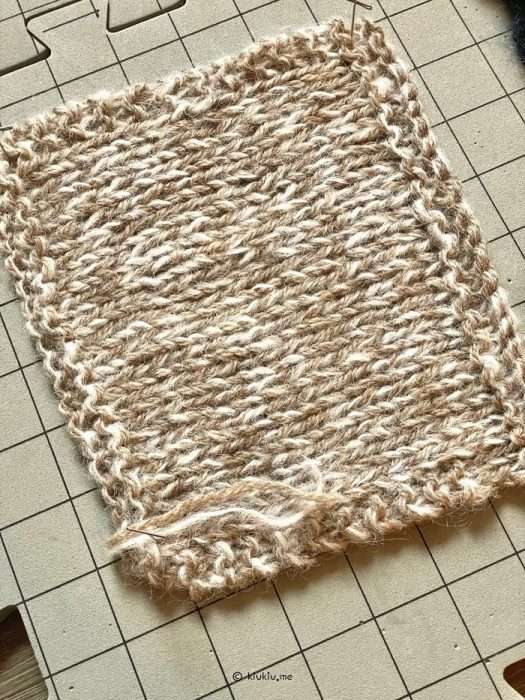
The finished piece feels substantial in hand and clearly leans toward deep winter use. It’s not lightweight, but that weight adds to the sense of warmth and protection when worn outside.
Warmth and Everyday Wear
In terms of warmth, this version delivers exactly what it promises. On very cold days, it feels reassuring and blocks out the chill effectively. Wind doesn’t cut through easily, and everything stays comfortably covered. My husband used to complain that his ears got painfully cold during late evening dog walks, but these days he reaches for this balaclava every night before heading out, especially when the temperature drops.
That said, it’s definitely on the heavier side for everyday wear. On milder days, it can feel like more than you need. It’s the kind of balaclava you reach for intentionally when it’s truly cold, rather than something you casually throw on for any outing.
Knitting Experience and Timeline
Once the initial setup was done, the knitting itself moved along smoothly. The pattern has long stretches of repetition, which made it easy to settle into a rhythm without constantly checking instructions. It was relaxing rather than demanding.
Because colder weather arrived quickly, I knit this version faster than usual. I started on October 31 and finished on November 11, completing the entire piece in just 11 days (Woohoo!). For something this warm and substantial, it progressed surprisingly well.
Finishing and Ties
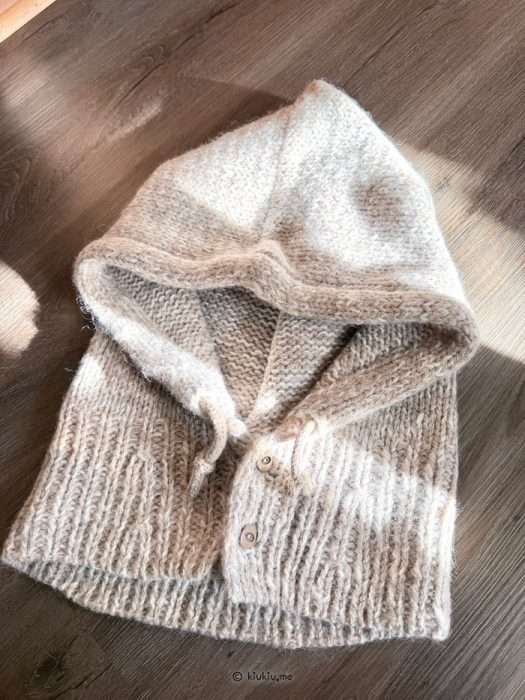
For the ties, I used an I-cord knitting machine. I don’t personally like knitting I-cords by hand, so this made the finishing process much more enjoyable. You just feed the yarn in, turn the handle, and it’s basically done—I could sit there watching YouTube and happily crank away without thinking too much. It also helped keep the momentum going instead of stalling right at the end.
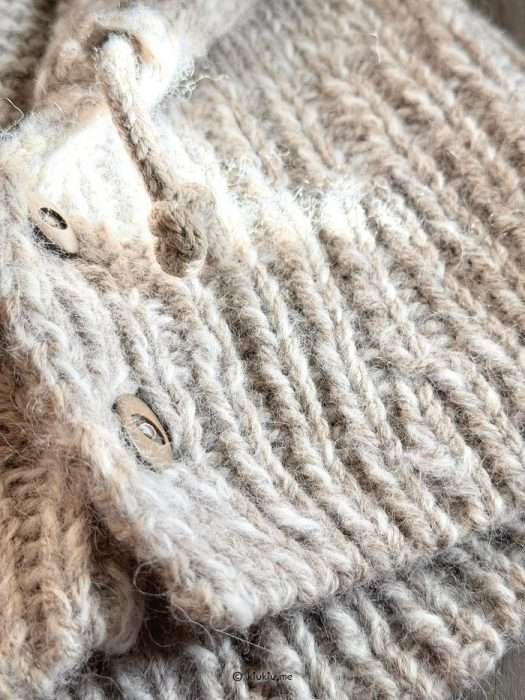
I used only the aran yarn for the ties and skipped the mohair. The main piece was already thick enough, and adding mohair would have made the ties unnecessarily bulky. Using the same yarn kept things simple and practical.
Version 2: A Lighter, Everyday Balaclava for Myself
Slower Start
I started my own version about a week after finishing the first one. Around that time, I developed some inflammation in my fingers. It wasn’t directly caused by knitting, but it did force me to slow down and knit in shorter sessions.
In a way, that slower pace helped. I paid closer attention to how the stitches felt on the needles and how the piece was coming together, without feeling rushed to finish.
Needle and Yarn Choices
For this version, versatility was the main goal. I wanted something I could wear not only in the coldest weather, but also in fall and early winter. To make that happen, I skipped the mohair entirely and used the pattern’s recommended 5.0 mm needle size.
That single change made a noticeable difference. The stitches felt more compact and flexible, and the overall piece became lighter and easier to wear for longer periods.
Texture, Look, and Everyday Wearability
Without mohair, the surface looks clean and straightforward. There’s no fuzzy halo—just the structure of the aran yarn itself. It’s not especially soft, but it has a casual, unfussy look that works well with everyday outfits. Visually, this version feels more relaxed and less obviously “winter gear,” which makes it easier to style without feeling overdone.
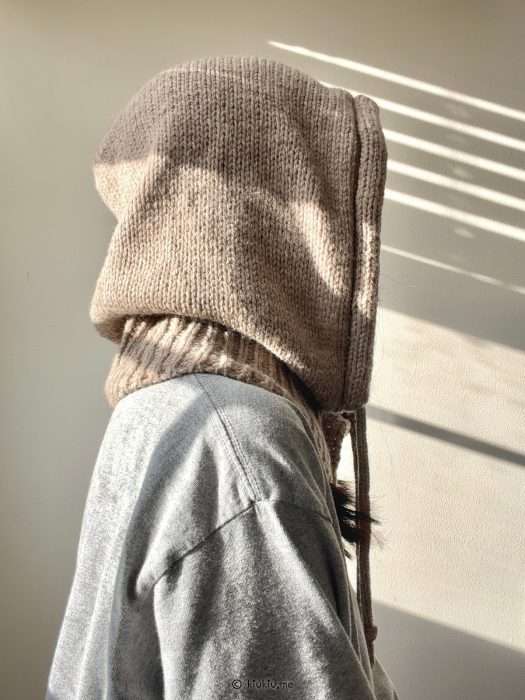
In practice, this lighter version quickly became the one I reached for most often. I wore it out regularly through most of December, and it worked especially well with a coat, adding a slightly casual touch instead of looking too bundled-up. It never felt like too much, even on days that were cold but not extreme. I was also really glad I chose a neutral, easy color—it made the balaclava far more wearable, and I didn’t have to think twice about whether it would go with what I was wearing.
Finishing and Year-End Wrap-Up
Finishing this version took a bit of time, especially when adding the ties and cleaning up the edges. However, having already completed one balaclava, the steps felt familiar and straightforward.
I finished this piece on December 12, which made it my final knitting project of the year. Ending the year with something practical and already in regular use felt especially satisfying.
Tubular Cast-On
One of the most memorable techniques I tried in this project was the tubular cast-on. To be honest, it didn’t go smoothly from the start. Since it was new to me, I got confused pretty quickly and ended up ripping it out twice before finally getting it right. Holding mohair together made it even trickier, because the stitches were harder to see and it took a while to tell what was going on.
Still, I’m really glad I pushed through and used the tubular cast-on in the end. Compared to a regular cast-on, the edge looks much cleaner and more polished, and the beginning of the piece feels nicely finished. It was a bit of extra effort while knitting, but once I saw the final result, it completely made sense why so many knitters swear by this method.
Yarn Notes: KnitPicks Simply Wool Aran
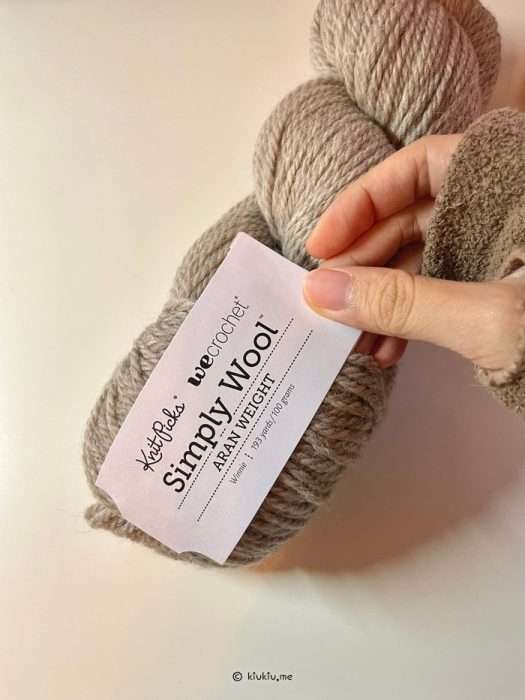
Softness and Skin Sensitivity
If there’s one downside to Simply Wool Aran, it’s softness. The yarn isn’t harsh, but it’s not particularly gentle either. The part that sits against the neck can feel uncomfortable if you have sensitive skin, and I noticed that fairly quickly.
If skin sensitivity is a major concern, choosing a softer yarn would likely improve the overall wearing experience.
Structure and Stitch Definition
That said, the yarn really shines in terms of structure. It holds its shape well, shows stitch definition clearly, and feels durable enough for frequent use. From a knitting perspective, it’s satisfying to work with and produces a clean, sturdy result.
Because my hair usually sits between my skin and the yarn, the texture is manageable for me, and I don’t feel the need to unravel either version.
Final Thoughts
Knitting the same balaclava pattern twice without changing the instructions turned out to be surprisingly informative. Simply adjusting needle size and yarn choices was enough to create two pieces with completely different personalities. One is warm, heavy, and ideal for the coldest days. The other is lighter, more flexible, and easy to wear regularly.
If I knit another one in the future, I’d love to try a softer yarn, especially for a child-sized version. Overall, this project was practical, enjoyable, and a good reminder of how much flexibility even a simple pattern can offer.
🧶 Must-Try Knitting & Crochet Projects
- Bottom-Up Cardigan Knitting FO: My First Fall Project
- Last Knitting Project This Summer: Lightweight Sweater Pattern
- My Favorite Things: Camisole No.4 — Simple Camisole Knitting FO
- Granny Square Cardigan FO: The Final Touches
- Modifying My Crochet Granny Square Cardigan for a Perfect Fit
- JHIA vs. TKGA: Which Knitting Certification Is Right for You?
- JHIA Knitting Certification: Is It Right for You?
- My Granny Square Cardigan Journey: Stitch by Stitch
Ready to start your next knitting project? Explore patterns, tutorials, and ideas for inspiration: Browse All Knitting & Crochet Projects
🧵 Must-Try Knitting Supplies & Ideas
Explore More in Creativity


Latest Updates:



Featured Videos: